
Monstera Leaves Not Splitting? Here's Why
You bought a beautiful Monstera, hoping to see those iconic large leaves with dramatic splits and holes. But months later, your plant keeps producing small, heart-shaped leaves without a single split.
Sound familiar?
Don't worry. Your Monstera might be perfectly healthy.
Many plant lovers experience this, especially when growing young Monstera plants indoors.
Those beautiful holes and splits, known as fenestrations, don't appear randomly. They develop naturally as your plant matures, and the right growing conditions can make a big difference.
In this guide, we'll explain why your Monstera leaves aren't splitting, how to encourage larger leaves with fenestrations, and what you can do to help your plant reach its full potential.
What Are Monstera Fenestrations?
One of the most recognizable features of Monstera plants is their unique foliage.
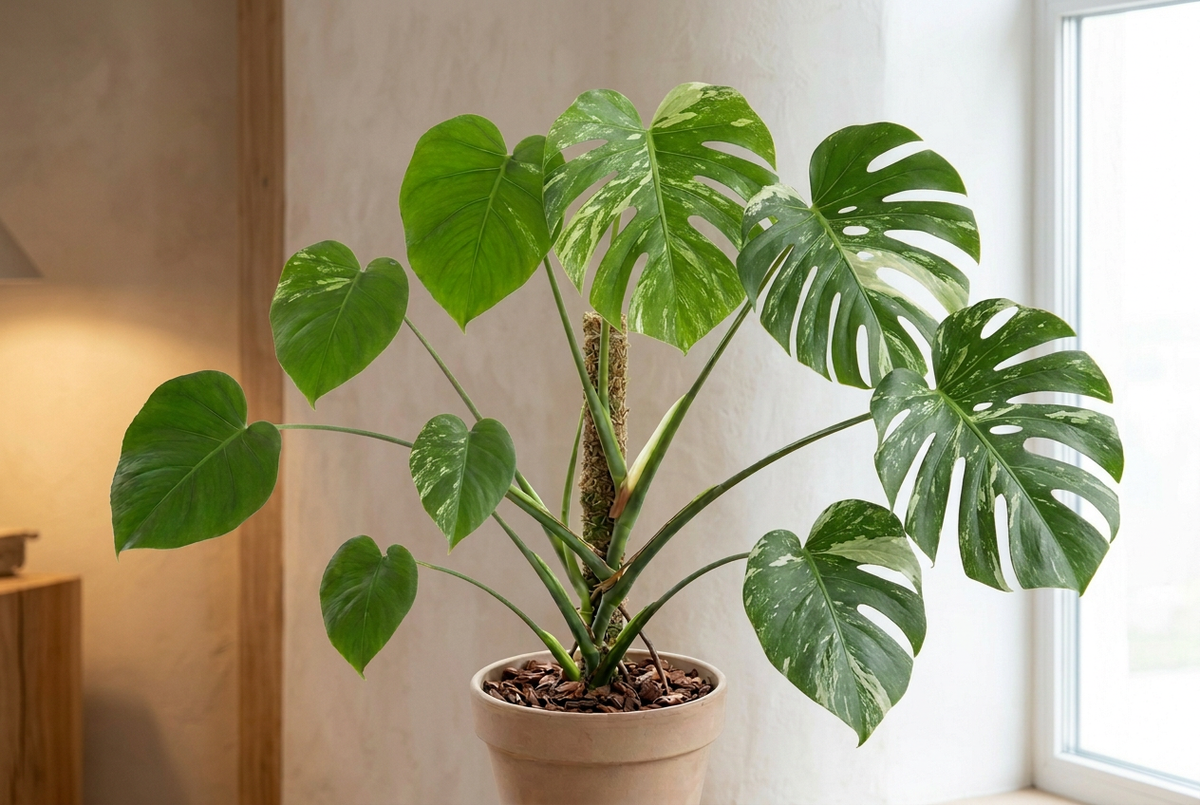
Mature Monstera deliciosa leaves can develop dramatic cuts along their edges and holes within the leaf surface.
These natural openings are called fenestrations.
There are two common forms:
-
Leaf splits: Deep cuts extending inward from the leaf edges.
-
Inner fenestrations: Enclosed holes that develop within the leaf blade.
Young Monstera deliciosa plants typically produce smaller, solid leaves.
As the plant matures, new leaves can become larger and develop increasingly dramatic fenestrations.
These changes are part of the plant's natural development.
Why Do Monstera Leaves Develop Holes?
In nature, Monstera deliciosa is a climbing tropical plant.
It uses aerial roots to attach to trees and other supports, gradually growing upward through the forest.
As the plant matures, its leaves change shape.
Scientists have proposed several explanations for Monstera fenestrations, including allowing light to reach lower foliage and reducing the effects of wind or heavy rain.
However, the precise evolutionary advantages of fenestration remain an area of scientific discussion.
For indoor growers, the most important point is that fenestration is closely associated with plant maturity and healthy development.
1. Your Monstera Is Still Too Young
One of the most common reasons Monstera leaves don't split is simply that the plant hasn't reached maturity.
Juvenile Monstera deliciosa plants naturally produce leaves without holes or deep cuts.
This is completely normal.
As a young Monstera grows, you may notice a gradual progression:
-
Small, solid, heart-shaped leaves.
-
Larger leaves with more developed shapes.
-
Leaves with their first edge splits.
-
More mature leaves with deeper splits.
-
Large leaves that may also develop internal holes.
Not every plant follows exactly the same progression.
What You Should Do
Give your Monstera time to grow.
Focus on maintaining healthy roots, providing adequate light, and supporting new growth.
A young Monstera cannot be forced to produce fully mature leaves immediately.
Patience is an important part of growing tropical plants.
2. Your Monstera Isn't Getting Enough Light
Light is one of the most important factors affecting Monstera growth.
A Monstera can survive in relatively low light, but that doesn't mean it will produce its most impressive foliage.
When light is insufficient, the plant may grow slowly and produce smaller leaves without fenestrations.
Signs Your Monstera Needs More Light
-
New leaves remain small.
-
Long spaces develop between leaves.
-
Stems stretch toward the window.
-
Growth becomes slow.
-
New leaves lack splits.
-
The plant develops a weak or leggy appearance.
How to Fix It
Place your Monstera somewhere with bright indirect light.
A bright window can provide a suitable environment, but avoid suddenly exposing the plant to intense direct sunlight.
Monsteras can tolerate some direct sunlight when properly acclimated, although intense exposure may burn leaves.
If your home doesn't receive sufficient natural light, consider adding a grow light.
Remember that brighter, appropriate lighting supports healthy growth, which can encourage more mature foliage over time.
3. Your Monstera Needs Something to Climb
Here's something many beginners don't realize:
Monstera deliciosa is naturally a climbing plant.
In tropical forests, Monstera uses its aerial roots to attach to trees as it grows upward.
Climbing growth is associated with the development of larger, more mature foliage.
When a Monstera grows without support, its stems may spread outward or become difficult to manage.
Providing a climbing structure can encourage a more natural growth habit.
Best Supports for Monstera
You can use:
-
Moss poles
-
Coco coir poles
-
Wooden planks
-
Sturdy trellises
-
Other appropriate vertical supports
For plants with aerial roots, a suitable moss pole or textured support can provide places for roots to attach.
How to Help Your Monstera Climb
Position the support along the back of the main stem, close to where aerial roots emerge.
Secure the stem gently with soft plant ties if needed.
Avoid tightly tying the leaf stalks or damaging the growing point.
As the plant establishes itself and climbs, new leaves may gradually become larger and more mature.
A moss pole isn't a guarantee of fenestration, but it can be an important part of encouraging healthy climbing growth.
4. Your Monstera May Have Root Problems
Healthy roots are essential for healthy leaves.
If your Monstera has unhealthy roots, it may struggle to produce strong new growth.
Poor root health can result from:
-
Overwatering
-
Poor drainage
-
Compacted growing media
-
Root rot
-
Severe underwatering
-
A damaged root system
Signs of Root Problems
-
Yellowing leaves
-
Drooping despite wet soil
-
Slower growth
-
New leaves becoming smaller
-
Soft or decaying roots
-
Growing media remaining wet for too long
How to Fix It
Check your watering routine and make sure the pot has adequate drainage.
For many Monsteras, a well-draining mix containing materials such as bark, perlite, coco chips, and other suitable components works well.
Avoid oversized pots that keep excess growing media wet for long periods.
If you suspect root rot, inspect the roots carefully and address any decaying tissue.
Healthy roots help your plant support larger foliage.
5. Your Monstera Isn't Receiving Enough Nutrients
Monstera plants need nutrients to support healthy growth.
When essential nutrients are insufficient, new leaves may become smaller and growth may slow down.
However, fertilizer alone won't automatically create fenestrations.
How to Fertilize Monstera
Use a balanced fertilizer suitable for indoor foliage plants during active growth.
Follow the manufacturer's dosage instructions and avoid excessive applications.
Too much fertilizer can damage roots and create additional problems.
If your Monstera receives insufficient light, adding extra fertilizer won't solve the underlying issue.
Healthy growth depends on balanced nutrition, appropriate light, and a functioning root system.
6. Your Monstera Is Experiencing Environmental Stress
Monsteras are tropical plants that generally prefer warm, stable growing conditions.
Sudden changes in the environment can temporarily affect growth.
Potential stress factors include:
-
Cold drafts
-
Sudden temperature changes
-
Extreme heat
-
Inconsistent watering
-
Pest problems
-
Recent repotting
-
Shipping stress
-
Environmental changes after moving the plant
What You Should Do
Keep your Monstera in stable growing conditions.
Many Monsteras grow well in typical warm indoor temperatures, with adequate humidity and gentle airflow.
Avoid moving the plant repeatedly between very different environments.
If your Monstera has recently been shipped or imported, give it time to acclimate before expecting strong new growth.
7. Your Monstera May Simply Need More Time
Sometimes, everything is going well.
Your plant has healthy roots, receives enough light, and is growing with support.
But the leaves still haven't developed the dramatic fenestrations you expected.
This doesn't necessarily mean something is wrong.
Different Monstera plants grow at different rates.
Growth depends on the plant's maturity, environment, genetics, and overall health.
Instead of looking for an instant solution, monitor the size and development of new leaves.
If each new leaf gradually becomes larger or more mature, your plant is moving in the right direction.
Can Existing Monstera Leaves Develop Splits Later?
No. A fully opened Monstera leaf will not develop new natural fenestrations later.
This is one of the most important things to understand.
Monstera fenestrations form as a new leaf develops, before it fully opens.
If a leaf emerges without holes or splits, that leaf will remain solid.
Improving light, fertilizer, or climbing support won't change the shape of an existing leaf.
However, those improvements may help the plant produce more mature foliage in the future.
So don't remove perfectly healthy leaves simply because they lack fenestrations.
They still help the plant produce energy.
How Long Does It Take for Monstera Leaves to Split?
There is no fixed timeline.
Some Monstera plants begin producing fenestrated leaves relatively early, while others may take longer depending on their maturity and growing conditions.
A healthy plant grown in suitable light with climbing support may develop mature foliage sooner than one kept in poor growing conditions.
However, no specific number of weeks or months guarantees that a Monstera will develop holes.
Rather than focusing on the calendar, pay attention to the plant's new growth.
How to Encourage Bigger Monstera Leaves
If your goal is to grow a Monstera with beautiful mature foliage, here are some practical steps.
Step 1: Improve the Light
Choose a bright location with suitable indirect light.
Acclimate the plant gradually if moving it into stronger light.
Step 2: Provide Climbing Support
Use a sturdy moss pole, wooden support, or other suitable climbing structure.
Step 3: Maintain Healthy Roots
Use appropriate growing media and a pot with drainage holes.
Step 4: Water Properly
Water thoroughly when needed, then allow the growing medium to dry appropriately before watering again.
Step 5: Fertilize During Active Growth
Use balanced nutrition without overfertilizing.
Step 6: Maintain Stable Growing Conditions
Avoid sudden environmental changes and protect your plant from extreme temperatures.
Step 7: Be Patient
Focus on healthy new growth instead of expecting old leaves to change.
With time and the right care, your Monstera may produce increasingly impressive foliage.
Does Every Monstera Develop the Same Kind of Holes?
No. Different Monstera species have different leaf characteristics.
Monstera deliciosa
Famous for large leaves with deep edge splits and, when mature, internal fenestrations.
Monstera adansonii
Known for its distinctive holes within the leaf surface, often giving it a delicate Swiss-cheese appearance.
Monstera dubia
Often develops small leaves that grow closely against a climbing surface when juvenile.
Its mature foliage can look dramatically different when grown in suitable conditions.
Variegated Monstera
Variegated forms of Monstera deliciosa, including Monstera Albo and Thai Constellation, can develop fenestrated leaves as they mature.
However, growth rate and leaf development may vary between individual plants.
Understanding your Monstera's species or cultivar helps you set realistic expectations.
Why Are My New Monstera Leaves Smaller Than the Old Ones?
Sometimes a Monstera produces large, fenestrated leaves and then begins growing smaller leaves.
Possible reasons include:
-
Reduced light
-
Loss of climbing support
-
Root problems
-
Stress after propagation
-
Recent environmental changes
-
Poor growing conditions
If your Monstera previously produced mature foliage but its new leaves are becoming smaller, examine its environment before making major changes.
Look for anything that may be limiting healthy growth.
Common Mistakes When Trying to Make Monstera Leaves Split
Some beginners unintentionally make the problem worse while trying to encourage fenestrations.
Avoid these mistakes:
-
Cutting healthy leaves: Removing solid leaves won't force the next leaf to split.
-
Adding too much fertilizer: Excess nutrients can damage roots rather than encourage maturity.
-
Suddenly increasing direct sunlight: Abrupt exposure can burn foliage.
-
Ignoring climbing support: Monstera deliciosa naturally benefits from climbing.
-
Overwatering: Constantly wet roots may prevent healthy growth.
-
Expecting immediate results: Fenestration develops as the plant matures.
The best approach is to support healthy growth rather than trying to force dramatic changes.
Buying a Monstera With Beautiful Mature Leaves
If you love large Monstera leaves with dramatic fenestrations, choosing the right plant can make a difference.
When shopping for Monstera plants, consider:
-
Plant size
-
Maturity
-
Current leaf shape
-
Existing fenestrations
-
Healthy roots
-
Growth habit
-
Climbing support
-
Variegation, if applicable
A mature Monstera with established fenestrations can be a good choice for someone who wants an immediate tropical statement plant.
A younger Monstera, meanwhile, offers the rewarding experience of watching the foliage gradually mature.
Both have their own appeal.
Explore Rare Monstera Plants at Aroid Market
At Aroid Market, we love the unique beauty of tropical foliage plants.
From classic green Monstera to collectible variegated forms, these plants offer some of the most recognizable leaves in the tropical plant world.
Our rare tropical plant selection may include Monstera, Philodendron, Anthurium, Scindapsus, Hoya, and other collector plants sourced from Indonesia.
Whether you're growing your first Monstera or expanding a collection of rare aroids, choosing healthy plants and understanding their growing habits is an important part of the experience.
For customers in the United States, Aroid Market also offers a simplified international buying process through our USA forwarding system.
Our team handles the international import arrangements through our forwarding network, so USA customers don't need to arrange their own import permits or customs brokerage for eligible orders.
This makes exploring tropical plants from Indonesia more convenient for collectors and plant lovers.
Discover our tropical plant collection at AroidMarket.com.
Frequently Asked Questions
Why is my Monstera growing healthy leaves without holes?
Your Monstera may still be juvenile, or it may not be receiving enough light to support mature growth. Lack of climbing support can also limit leaf development.
How do I get my Monstera leaves to split?
Provide appropriate bright light, a climbing support, healthy roots, consistent watering, and time for the plant to mature.
Will Monstera leaves split after they open?
No. Existing fully opened leaves will not develop new natural fenestrations. Watch future leaves for changes.
Does Monstera need a moss pole to develop splits?
A moss pole isn't strictly required, but climbing support can encourage larger, more mature growth in Monstera deliciosa.
Can Monstera leaves split in low light?
Monstera may survive in lower light, but insufficient light can limit mature leaf development and fenestration.
Why does my Monstera have splits but no inner holes?
Your plant may be developing mature foliage gradually. Internal fenestrations often become more pronounced as Monstera deliciosa produces larger adult leaves.
Will pruning make my Monstera develop bigger leaves?
Pruning does not directly trigger fenestration. Focus on light, climbing support, root health, and overall growing conditions.
Does Monstera Thai Constellation develop fenestrations?
Yes. Monstera Thai Constellation is a variegated form of Monstera deliciosa and can develop mature, fenestrated foliage.
Final Thoughts
If your Monstera leaves aren't splitting, remember that it doesn't automatically mean something is wrong.
Your plant may simply be young, growing in insufficient light, or waiting for the right conditions to produce more mature foliage.
By providing appropriate light, healthy roots, climbing support, and consistent care, you can help your Monstera develop naturally.
And sometimes, the most rewarding part of growing Monstera is watching each new leaf become more impressive than the last.
Ready to explore more beautiful tropical plants? Visit AroidMarket.com and discover our collection of rare and collectible plants from Indonesia.

Written by Aroid Market

Leave a comment
This site is protected by hCaptcha and the hCaptcha Privacy Policy and Terms of Service apply.