

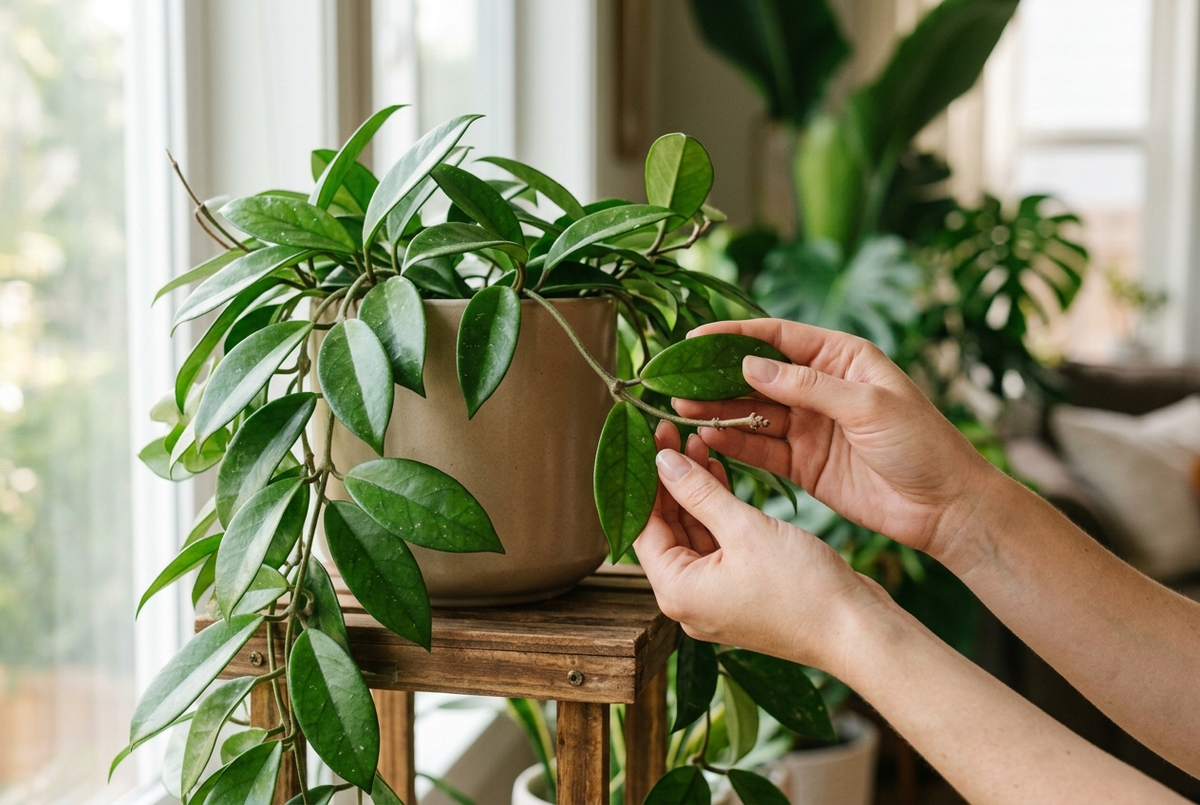
Why Won't My Hoya Bloom? Here's What You Need to Know
Your Hoya looks healthy. Its vines are growing, the leaves are beautiful, and everything seems perfectly fine. But there is one thing missing: flowers.
If you have been waiting for your Hoya to bloom, you are definitely not alone. Many plant lovers experience the same thing. Their Hoyas grow beautifully for months or even years without producing a single flower.
The good news? A Hoya that isn't flowering isn't necessarily unhealthy.
Sometimes, your plant simply needs more light, a little patience, or a small adjustment to its growing conditions.
In this guide, we'll explore why your Hoya isn't blooming, how to encourage Hoya flowers, and what you should know about caring for these beautiful tropical plants.
What Makes Hoya Flowers So Special?
Hoyas, commonly known as wax plants or porcelain flowers, are loved by collectors for their beautiful foliage and fascinating flowers.
Unlike many ordinary flowering houseplants, Hoyas produce clusters of small, star-shaped flowers that often look like they are made from wax or porcelain.
Depending on the species, Hoya flowers can feature:
-
White, pink, red, yellow, or other beautiful colors
-
Sweet, floral, or sometimes unusual fragrances
-
Tiny star-shaped petals
-
Clusters of multiple flowers
-
Nectar droplets
-
Different flowering habits and bloom cycles
Some Hoya flowers are particularly fragrant during the evening, making them even more interesting for collectors.
But while Hoya foliage can remain attractive year-round, flowering requires the right conditions.
Why Won't My Hoya Bloom?
The most common reasons a Hoya doesn't bloom include insufficient light, an immature plant, unsuitable watering, damaged flower peduncles, or unstable growing conditions.
Here are the factors worth checking before making changes to your plant.
1. Your Hoya Isn't Getting Enough Light
One of the biggest reasons Hoyas fail to flower indoors is insufficient light.
Your Hoya may produce healthy-looking leaves and long vines even when it doesn't receive enough light to support flowering.
This can make the problem difficult to notice.
Signs Your Hoya Needs More Light
-
Long, thin vines with widely spaced leaves
-
Slow growth
-
Smaller new leaves
-
Healthy foliage but no flowers
-
Very little new growth over time
How to Fix It
Move your Hoya to a location with brighter indirect light.
A bright east-facing window can be a good starting point. A south- or west-facing window may also work with appropriate filtering and acclimation to prevent leaf scorch.
If natural light is limited, consider using a suitable grow light.
Remember that bright indirect light is often one of the most important factors in encouraging Hoya blooms.
However, avoid suddenly moving a shade-grown plant into intense direct sunlight.
2. Your Hoya May Be Too Young to Flower
Sometimes, the problem is simply that your Hoya has not reached flowering maturity.
Some Hoyas begin flowering relatively early under suitable conditions, while others take several years to establish themselves.
For example, Hoya carnosa may take approximately two to three years to reach flowering maturity, although timing varies with the plant's age and growing conditions.
What You Can Do
Instead of trying to force a young plant to bloom, focus on encouraging healthy growth.
Provide appropriate light, water, temperature, and nutrients.
A young Hoya with a healthy root system and strong vines is building the foundation for future flowering.
Patience is part of the experience of collecting Hoyas.
3. You're Cutting Off the Flower Peduncles
This is one of the most important things every Hoya collector should know.
Many Hoyas produce flowers from specialized structures called peduncles, sometimes referred to as flower spurs.
These structures can remain attached to the vine after the flowers fall.
And here's what makes them special:
Many Hoyas can bloom repeatedly from the same peduncle.
If you cut it off, you may accidentally remove a future flowering site.
How to Recognize a Hoya Peduncle
A peduncle often looks like a short stalk extending from the vine.
It may initially resemble a small stem or unusual growth point.
Over time, buds may develop at its tip and eventually form a cluster of flowers.
What You Should Do
-
Avoid removing healthy peduncles.
-
Let spent flowers fall naturally.
-
Do not mistake an old flower spur for useless growth.
-
Be careful when pruning vines.
-
Protect developing buds from accidental damage.
Some Hoya species have different flowering habits, so understanding the particular species you grow is helpful.
4. Your Watering Routine May Be Affecting Flowering
Hoyas generally prefer growing media that offer both moisture and excellent drainage.
However, watering requirements vary between species, potting mixes, and environments.
Keeping roots constantly wet can damage them, while excessive dryness can also stress the plant.
Signs of Watering Problems
-
Wrinkled or soft leaves
-
Yellowing foliage
-
Slow growth
-
Buds falling before opening
-
Roots becoming unhealthy
-
Growing mix remaining wet for too long
How to Fix It
Check the growing medium before watering.
For many commonly cultivated Hoyas, allowing the mix to dry partially between thorough waterings works well.
Use a pot with drainage holes and avoid leaving the roots sitting in standing water.
During cooler or lower-light periods, reduce watering frequency as needed.
The goal is healthy roots and consistent care—not deliberately stressing your Hoya to force flowers.
5. Your Hoya May Need Better Growing Conditions
Many Hoyas are tropical plants that appreciate warm temperatures, adequate humidity, and stable growing conditions.
A plant experiencing frequent temperature changes, cold drafts, or extreme dryness may struggle to grow and flower.
Temperature
Many commonly grown Hoyas perform well at typical indoor temperatures, around 65–80°F (18–27°C).
However, ideal temperature requirements vary by species.
Some prefer slightly cooler conditions, while others require consistently warmer temperatures.
Humidity
Many common Hoyas can adapt to average household humidity.
Moderate humidity may support healthier growth, particularly during active growth and bud development.
You don't necessarily need an expensive greenhouse cabinet to grow beautiful Hoyas.
Airflow
Good airflow helps prevent stagnant moisture and supports healthy growing conditions.
If you're growing Hoyas inside a plant cabinet or greenhouse, make sure air can circulate gently around the plants.
6. Your Hoya Might Need a Better Potting Mix
Healthy roots are essential for healthy growth and flowering.
Many Hoyas naturally grow as epiphytes, which means they may grow attached to trees and other surfaces rather than in dense ground soil.
This helps explain why many cultivated Hoyas perform well in airy, fast-draining growing media.
A Good Hoya Mix May Include
-
Orchid bark
-
Perlite
-
Coco chips
-
Pumice
-
A suitable moisture-retaining organic component
The exact mixture should match the species and your growing environment.
Avoid media that remain waterlogged for extended periods.
A healthy root system allows your Hoya to absorb water and nutrients more efficiently.
7. Your Hoya May Be in an Oversized Pot
Many Hoyas grow and flower well when their roots fit relatively snugly inside their container.
This doesn't mean you should deliberately restrict root growth or let the plant become severely root-bound.
However, moving a small Hoya into a much larger pot may leave excessive growing medium around the roots.
That medium can remain wet for too long.
What You Should Do
Choose a pot appropriate for the root system.
Repot when necessary, rather than moving the plant into a large container simply to encourage faster growth.
If your Hoya is healthy in its current pot, you may not need to repot it.
8. Your Hoya May Need Balanced Nutrition
Fertilizer can support healthy plant development, but more fertilizer does not automatically mean more flowers.
Overfertilizing can damage roots and lead to poor plant health.
During active growth, use an appropriate balanced fertilizer according to the product instructions.
Avoid excessively strong fertilizer concentrations or frequent changes between different products.
There is no guaranteed fertilizer that will make every Hoya bloom immediately.
Adequate light, healthy roots, plant maturity, and stable care are more important than relying on bloom boosters alone.
9. Your Hoya Is Producing Buds, but They Keep Falling Off
Sometimes, a Hoya begins forming flower buds, but the buds drop before opening.
This is often called bud blast.
Possible causes include:
-
Sudden changes in light
-
Moving the plant during bud development
-
Irregular watering
-
Temperature fluctuations
-
Excessively wet or dry growing media
-
Other environmental stress
How to Prevent Bud Drop
Once you notice developing buds, avoid unnecessary changes.
Keep your Hoya in a stable location, maintain appropriate watering, and avoid disturbing the plant.
A Hoya with buds doesn't need constant attention. It needs consistency.
How to Encourage Your Hoya to Bloom
If your Hoya is healthy but hasn't flowered, start with these practical steps.
Step 1: Improve the lighting. Move the plant gradually into a brighter location with suitable indirect light.
Step 2: Check the roots. Make sure the growing medium drains properly and the roots are healthy.
Step 3: Protect the peduncles. Do not remove old flower spurs unnecessarily.
Step 4: Maintain stable conditions. Avoid frequent changes in temperature, humidity, and watering.
Step 5: Fertilize moderately. Support healthy growth with appropriate nutrition during active growth.
Step 6: Give the plant time. Some Hoyas require years to mature, and different species have different flowering habits.
Most importantly, remember that Hoya flowering is a natural process, not something that can always be rushed.
Which Hoya Plants Are Good for Flower Lovers?
If you enjoy collecting Hoyas for their flowers, some well-known species are worth exploring.
Hoya carnosa
One of the most recognizable Hoyas, with thick foliage and attractive clusters of pinkish-white flowers.
It is a great starting point for anyone interested in growing flowering Hoyas.
Hoya pubicalyx
Known for its elongated foliage, sometimes with silver markings, and clusters of colorful, often fragrant flowers.
Its climbing growth habit makes it attractive for trellises and plant displays.
Hoya australis
A beautiful climbing Hoya with glossy foliage and clusters of pale, fragrant flowers.
It can become an impressive indoor plant when given suitable growing conditions.
Hoya lacunosa
Popular among collectors for its smaller foliage and delicate, fragrant flowers.
Its compact growth habit makes it suitable for hanging displays and smaller spaces.
Every Hoya species has its own characteristics, flowering habits, and care requirements.
Exploring different species is part of what makes Hoya collecting so rewarding.
Can You Buy a Hoya That Already Has Peduncles?
Yes. Some Hoya plants are offered with visible peduncles, making them especially interesting for collectors who enjoy observing flower development.
When buying a Hoya, you can ask the seller whether the plant has:
-
Established roots
-
Mature vines
-
Visible peduncles
-
Developing flower buds
-
Previous flowering history
However, an existing peduncle does not guarantee immediate blooming.
Shipping, environmental changes, and acclimation can influence when the plant flowers again.
For collectors, understanding these details can make the buying experience more rewarding.
Buying Rare Hoya Plants Online
The world of Hoya collecting extends far beyond commonly available varieties.
Collectors often search for Hoyas with unusual leaf shapes, beautiful silver or splash patterns, interesting textures, distinctive flowers, and uncommon species.
Indonesia is one of the regions associated with a wide diversity of tropical Hoya species and cultivated collector plants.
If you're looking to expand your Hoya collection, choosing an experienced plant supplier is important.
Before buying, consider the plant's root condition, size, maturity, shipping method, and acclimation needs.
Discover Rare Hoya Plants at Aroid Market
At Aroid Market, we share a passion for rare and collectible tropical plants, especially the incredible diversity of Hoyas.
Our Hoya selections may include species and collector forms with beautiful foliage, unusual textures, silver markings, variegation, and fascinating flowering characteristics.
Whether you're searching for your first Hoya or expanding an established collection, exploring different species can be an exciting journey.
For our customers in the United States, we also offer a simplified buying experience through our USA forwarding system.
Our team handles the international import process through our forwarding arrangement, so customers don't have to personally arrange import permits, customs brokerage, or import-related handling procedures.
That means you can spend more time enjoying your collection and less time worrying about international plant shipping arrangements.
Explore rare Hoya plants at AroidMarket.com and discover something special for your collection.
Frequently Asked Questions About Hoya Flowering
How long does it take for a Hoya to bloom?
It depends on the species, maturity, and growing conditions. Some Hoyas flower relatively early, while others take several years. Hoya carnosa, for example, may need approximately two to three years to reach flowering maturity.
Can Hoya bloom indoors?
Yes. Many Hoyas can bloom indoors with appropriate light, healthy roots, suitable temperatures, and consistent care.
Why is my Hoya growing leaves but not flowers?
Insufficient light is a common reason. The plant may have enough light to maintain foliage but not enough to encourage flowering. Immaturity and other growing conditions may also contribute.
Should I cut off old Hoya flower stems?
Generally, no. Many Hoyas rebloom from existing peduncles. Removing them may eliminate future flowering sites.
Does Hoya need direct sunlight to bloom?
Hoyas generally benefit from bright light. Some tolerate gentle direct morning sunlight, but intense direct sun can scorch foliage. Light requirements vary by species.
Can Hoya flower more than once?
Yes. Many Hoyas can produce multiple flowering cycles, sometimes from the same peduncles.
Why are my Hoya flower buds falling off?
Bud drop can result from environmental changes, inconsistent watering, temperature fluctuations, or moving the plant during bud development.
Will a newly imported Hoya bloom immediately?
Not necessarily. Newly shipped or imported Hoyas may need time to acclimate before resuming active growth or flowering.
Final Thoughts: Patience Is Part of the Beauty of Hoya Collecting
If your Hoya isn't blooming yet, don't give up.
Beautiful foliage, healthy roots, and strong growth are already signs of progress.
Flowering may require brighter light, improved growing conditions, plant maturity, or simply more time.
Once you understand how Hoyas grow and what encourages them to produce flowers, caring for them becomes even more rewarding.
And sometimes, the most memorable moment in Hoya collecting is discovering a tiny peduncle that eventually develops into your plant's first beautiful cluster of flowers.
Ready to discover your next favorite Hoya? Visit AroidMarket.com and explore our collection of rare tropical plants from Indonesia.

Written by Aroid Market
Leave a comment
This site is protected by hCaptcha and the hCaptcha Privacy Policy and Terms of Service apply.