
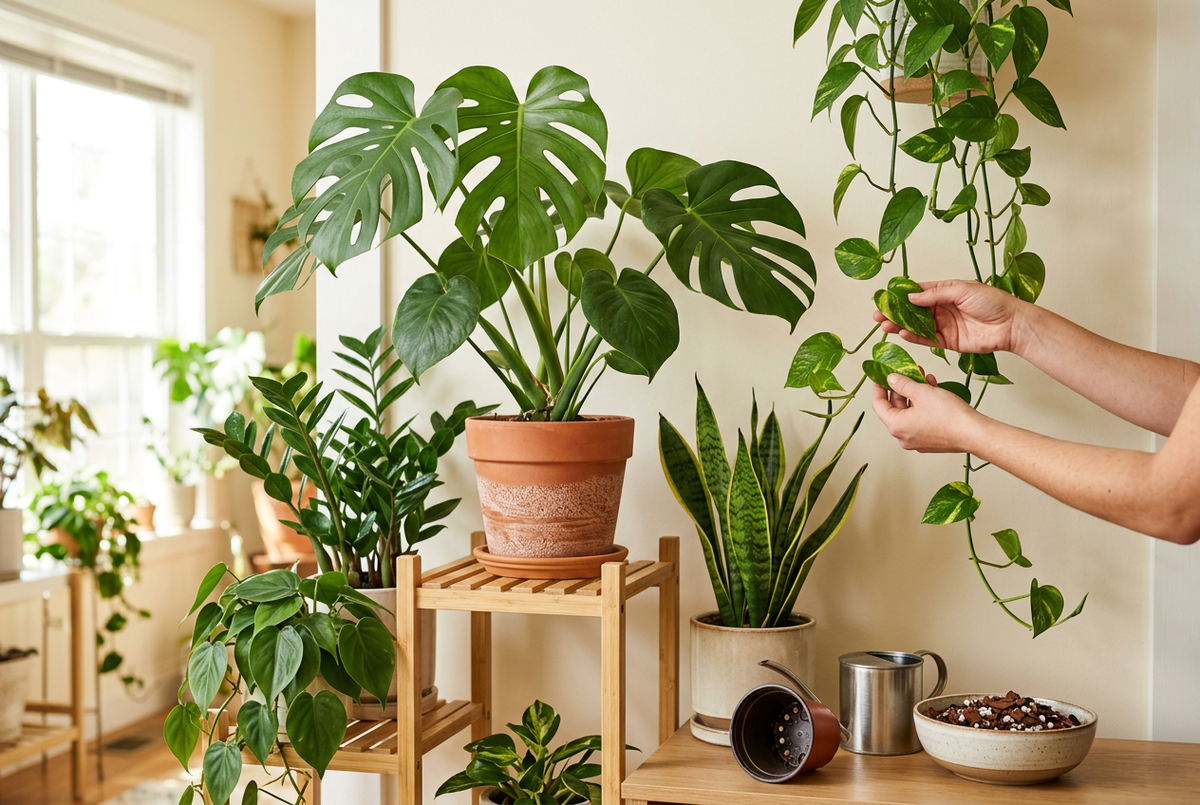
How to Choose Your First Houseplant
Choosing your first houseplant is an exciting step. A plant can make your home feel warmer, fresher, and more alive. But if you are new to indoor plants, choosing the right one can feel confusing.
Should you buy a Monstera? A Pothos? A Snake Plant? A Philodendron? What if your room does not get much light? What if you forget to water? What if you have pets?
The best first houseplant is not always the most popular plant or the most beautiful plant you see online. The best first houseplant is the one that matches your home, your lifestyle, and your level of experience.
This guide will help you choose your first houseplant with confidence, understand what your plant needs, and avoid common beginner mistakes.
Why Your First Houseplant Matters
Your first houseplant can shape your entire plant journey. If you choose a plant that is too difficult, you may feel discouraged. But if you start with a plant that is forgiving and suitable for your space, you can build confidence and enjoy the process.
A good first houseplant should help you learn the basics of plant care, such as light, watering, soil, humidity, and growth habits. Once you understand these basics, it becomes easier to explore more unique indoor plants, tropical plants, and rare houseplants.

Start With Your Home, Not the Plant
Many beginners choose a plant because it looks beautiful in a photo. While appearance matters, your home environment matters more.
Before choosing your first plant, look at your space and ask yourself a few simple questions:
-
How much natural light does the room get?
-
Do you want a small plant or a statement plant?
-
Do you usually remember to water?
-
Is your home dry or humid?
-
Do you have pets?
-
Do you want something easy or something more collectible?
-
Do you want a plant for decoration, collection, or future resale?
When you understand your space first, choosing the right plant becomes much easier.
1. Check Your Light
Light is one of the most important factors when choosing your first houseplant. Different plants need different levels of light, and choosing the wrong plant for your lighting condition is one of the most common beginner mistakes.
Most indoor plants prefer bright indirect light. This means the room is bright, but the plant is not sitting directly under harsh sunlight for long periods.
If You Have Bright Indirect Light
If your room has a bright window with filtered light, you have many options. Plants like Monstera, Philodendron, Hoya, Scindapsus, Syngonium, Anthurium, and many tropical houseplants can grow well in bright indirect light.
This is also a great condition if you want to explore rare houseplants later.
If You Have Medium Light
Medium light is suitable for many beginner-friendly plants. Pothos, ZZ Plant, Snake Plant, Philodendron, and some Scindapsus varieties may do well in medium indoor light.
Growth may be slower, but the plant can still look healthy if care is stable.
If You Have Low Light
Low light does not mean no light. All plants need some light to grow. If your room is quite dark, choose more tolerant plants such as Snake Plant, ZZ Plant, or Pothos.
If you want to grow tropical or rare plants in a darker room, consider using a grow light.
2. Understand Your Watering Habit
Your watering habit should influence the plant you choose. Some people love checking their plants every day, while others forget to water for a week or more.
There is no perfect watering personality. You just need to choose a plant that fits your routine.
If You Often Forget to Water
Choose plants that can tolerate drying out a little, such as:
-
Snake Plant
-
ZZ Plant
-
Hoya
-
Pothos
-
Some Scindapsus varieties
These plants are usually more forgiving if you miss a watering.
If You Like Watering Often
Be careful. Many beginners kill plants by watering too much. If you enjoy watering frequently, choose plants that like consistent moisture but still need good drainage.
You can try plants like Peace Lily, some Anthurium types, or tropical foliage plants, but always check the soil before watering.
The Best Watering Rule for Beginners
Do not water only because the calendar says so. Always check the growing medium first. Many indoor plants prefer the top layer of the soil or mix to dry slightly before being watered again.
3. Think About Plant Size
Your first houseplant should fit your space. A small desk plant may be better for a bedroom or office, while a larger plant can become a statement piece in a living room.
Small Plants
Small plants are great for shelves, desks, windowsills, and small apartments. Good options include:
-
Pothos
-
Scindapsus
-
Syngonium
-
Small Hoya
-
Small Philodendron
Small plants are easy to move and easier to monitor.
Medium Plants
Medium plants are good for plant stands, side tables, and bright corners. Good options include:
-
Philodendron
-
Monstera adansonii
-
Peace Lily
-
Anthurium
-
Hoya on a trellis
Large Statement Plants
Large plants create strong visual impact. Good options include:
-
Monstera deliciosa
-
Large Philodendron
-
Snake Plant
-
Ficus
-
Large Anthurium
Large plants need more space, larger pots, and more stable care.
4. Choose a Plant That Matches Your Lifestyle
Your lifestyle matters. A busy person may need a different plant than someone who enjoys daily plant care.
For Busy People
If you travel often or forget to water, choose low-maintenance plants such as Snake Plant, ZZ Plant, Pothos, or Hoya.
These plants usually do not need constant attention.
For People Who Love Decorating
If you want a plant that looks beautiful in your home, choose plants with strong visual appeal such as Monstera, Philodendron, Scindapsus, Anthurium, or Syngonium.
These plants can add a tropical and stylish feeling to your space.
For Future Collectors
If you already feel interested in rare plants, start with easier tropical plants first. Good choices include Scindapsus, Philodendron, Monstera, Hoya, and Syngonium.
These plants can help you build confidence before moving into rare Anthurium, variegated plants, or imported tropical plants.
5. Consider Pets and Children
If you have pets or small children, plant safety is important. Many popular houseplants can be irritating or toxic if chewed or eaten.
Plants such as Pothos, Philodendron, Monstera, Peace Lily, and some other tropical plants should be kept away from curious pets and children.
If you have cats or dogs, place plants on high shelves, hanging baskets, plant stands, or in a room where pets cannot reach them. You can also research pet-safe plant options before buying.
6. Decide If You Want Easy, Beautiful, or Collectible
Not every beginner wants the same type of plant. Some people want the easiest plant possible. Others want something beautiful. Some want to start collecting rare plants right away.
Here are three simple categories to help you choose.
Easiest First Houseplants
These are good if you want something simple and forgiving:
-
Snake Plant
-
ZZ Plant
-
Pothos
-
Spider Plant
-
Philodendron Brasil
Beautiful Beginner Plants
These are good if you want something attractive but still manageable:
-
Monstera
-
Scindapsus
-
Syngonium
-
Hoya
-
Peace Lily
-
Anthurium
Beginner Collector Plants
These are good if you want to start exploring the rare plant world:
-
Scindapsus
-
Hoya
-
Philodendron
-
Syngonium
-
Monstera
-
Easier Anthurium types
These plants are a great bridge between common houseplants and rare tropical plants.
7. Learn the Basic Care Before Buying
Before buying your first houseplant, learn the basic care needs. You do not need to become an expert, but you should understand the fundamentals.
Light
Most houseplants need bright indirect light. Avoid placing plants in very dark corners or under harsh direct sun unless the plant is suited for that condition.
Water
Check the growing medium before watering. Overwatering is one of the most common beginner mistakes.
Soil or Growing Mix
Many tropical plants prefer a well-draining mix. A chunky mix can help roots breathe and reduce the risk of root rot.
Humidity
Some plants can adapt to normal home humidity, while tropical plants may prefer higher humidity. If your home is very dry, a humidifier or plant cabinet may help.
Airflow
Good airflow helps reduce fungal issues and stagnant moisture, especially if you keep many plants close together.
8. Avoid Buying Only Based on Trends
Social media can make certain plants look very tempting. But a trending plant is not always the best first plant.
Before buying a plant because it is popular, ask yourself:
-
Can I provide the right light?
-
Can I manage the watering needs?
-
Is it suitable for my home?
-
Is it too expensive for my first plant?
-
Is it too sensitive for my experience level?
It is better to start with a plant that fits your life than to buy a trendy plant that struggles in your space.
9. Buy From a Reliable Seller
Where you buy your plant matters. A healthy plant from a reliable seller is easier to care for than a stressed plant from an unknown source.
When buying a houseplant, look for:
-
Healthy leaves
-
Strong stems
-
Good root condition
-
Clear plant photos
-
Honest descriptions
-
Good communication
-
Proper packing if shipped
-
Experience with live plants
If you are buying online, actual plant photos and clear descriptions are especially helpful.
10. Good First Houseplants to Consider
Here are some great options for first-time plant owners.
Pothos
Pothos is one of the easiest houseplants to grow. It can trail, climb, and tolerate a range of indoor conditions.
Best for: beginners, shelves, hanging baskets, low-maintenance plant care.
Snake Plant
Snake Plant has upright leaves and needs very little watering. It is great for busy people and simple interiors.
Best for: low-maintenance care, modern spaces, forgetful waterers.
ZZ Plant
ZZ Plant has glossy leaves and is very forgiving. It can handle lower light and does not need frequent watering.
Best for: offices, beginners, low-water care.
Monstera
Monstera is famous for its split leaves and tropical appearance. It is a great plant for beginners who want something bold and iconic.
Best for: bright rooms, statement plants, tropical style.
Philodendron
Philodendron offers many beginner-friendly options and beautiful tropical foliage. Some trail, some climb, and some grow upright.
Best for: plant lovers who want variety and future collector potential.
Scindapsus
Scindapsus is loved for its silver-patterned leaves. It is beautiful, elegant, and manageable for many beginners.
Best for: shelves, hanging baskets, collectors who love patterned leaves.
Hoya
Hoya has thick leaves, trailing vines, and beautiful flowers when mature. Many Hoyas prefer to dry slightly between waterings.
Best for: collectors, hanging baskets, people who do not want to water too often.
Syngonium
Syngonium grows quickly and has attractive arrow-shaped leaves. It comes in many colors and variegated forms.
Best for: fast growth, small spaces, beginner collectors.
Anthurium
Anthurium can be a beautiful first tropical plant if you choose an easier type. It is known for elegant leaves or flowers.
Best for: people who want a premium tropical look.
Common Mistakes When Choosing Your First Houseplant
Choosing your first plant is easier when you know what mistakes to avoid.
Choosing a Plant That Needs More Light Than You Have
A beautiful plant will not grow well if your room is too dark. Match the plant to your light condition.
Buying Too Many Plants at Once
Start with one to three plants. Learn their care needs first, then grow your collection slowly.
Overwatering
Too much water can damage roots. Always check the growing medium before watering.
Repotting Immediately
New plants need time to adjust. Unless there is a serious issue, wait before repotting.
Choosing a Very Expensive Plant First
It is better to build confidence with easier plants before buying expensive rare plants.
Moving From Your First Houseplant to Rare Plants
Once you understand basic plant care, you may want to explore rare and collectible houseplants.
Rare tropical plants can offer:
-
Unique leaf shapes
-
Velvet texture
-
Variegation
-
Silver patterns
-
Dramatic veins
-
Unusual growth habits
-
Collector value
Plants such as Philodendron, Anthurium, Hoya, Scindapsus, Monstera, Syngonium, and Alocasia are popular among collectors because they offer incredible diversity.
Buying Rare Houseplants From Aroid Market
Aroid Market offers rare and collectible tropical plants for international customers, especially plant lovers, collectors, resellers, and wholesale buyers in the USA.
Our selection may include rare Aroids, Hoya, Anthurium, Philodendron, Scindapsus, Syngonium, Monstera, and other tropical collector plants from Indonesia.
For USA customers, Aroid Market helps make the buying experience easier through our USA forwarding system. This allows customers to access rare tropical plants without personally handling the complicated import process.
Whether you are choosing your first tropical houseplant or starting a rare plant collection, Aroid Market can help you find unique plants for your home, collection, or plant business.
Final Thoughts
Choosing your first houseplant does not have to be complicated. Start by looking at your home, your light, your watering habits, your space, and your lifestyle.
The best first houseplant is not the trendiest or most expensive plant. It is the plant that fits your life and helps you enjoy the process of growing.
Start simple, learn the basics, and build confidence. Once you feel ready, you can explore more unique tropical plants, rare houseplants, and collector plants.
If you are ready to discover rare tropical plants from Indonesia, visit AroidMarket.com and explore our latest selection for plant lovers, collectors, resellers, and USA buyers.

Written by Aroid Market

Leave a comment
This site is protected by hCaptcha and the hCaptcha Privacy Policy and Terms of Service apply.