
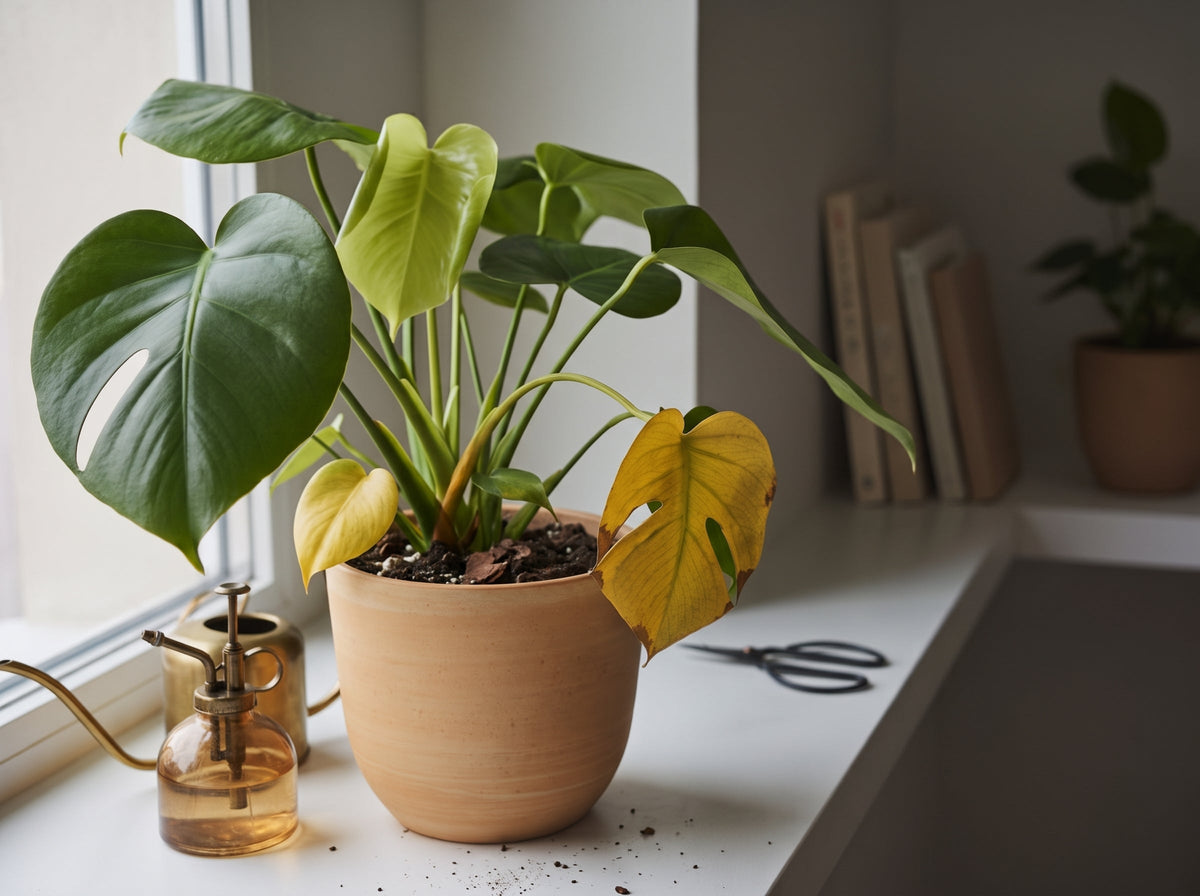
Why Is My Aroid Turning Yellow? Common Causes and Fixes
Yellow leaves are one of the most common complaints among aroid collectors, whether you're growing a Monstera deliciosa, a Philodendron gloriosum, or a rare Anthurium. The good news? Yellowing is almost always fixable once you identify the root cause.
Here are the most common reasons your aroid is turning yellow — and what to do about it.
1. Overwatering (The #1 Culprit)
Aroids love moisture, but they hate sitting in soggy soil. Overwatering suffocates the roots, preventing them from absorbing oxygen and nutrients — which shows up as yellowing leaves.
Signs: Yellow leaves that feel soft or mushy, soggy soil that stays wet for more than a week, possible root rot smell.
Fix: Let the soil dry out partially before watering again. Check that your pot has drainage holes. If root rot has set in, unpot the plant, trim the black/mushy roots, and repot in fresh, well-draining mix.
2. Underwatering
On the flip side, a thirsty aroid will also yellow — especially on older, lower leaves.
Signs: Dry, crispy edges alongside yellowing, bone-dry soil, leaves that droop or curl.
Fix: Water thoroughly until it drains from the bottom, and establish a consistent watering schedule based on your environment.
3. Low Light
Aroids are tropical plants that thrive in bright, indirect light. Too little light slows photosynthesis, causing leaves to lose their green pigment.
Signs: Pale yellow color (not bright yellow), slow growth, small new leaves.
Fix: Move your plant closer to a window with filtered light, or supplement with a grow light — especially during winter months.
4. Nutrient Deficiency
If your aroid hasn't been fertilized in a while, it may be running low on key nutrients like nitrogen, magnesium, or iron.
Signs: Yellowing between the veins (interveinal chlorosis) while veins stay green, or overall pale coloring.
Fix: Feed with a balanced liquid fertilizer (e.g., 20-20-20) during the growing season (spring–summer). For magnesium deficiency specifically, a diluted Epsom salt solution can help.
5. Natural Leaf Senescence
Sometimes, yellow leaves are simply old leaves dying off — a completely normal part of a plant's life cycle.
Signs: Only the oldest, lowest leaves are yellowing, one at a time, while new growth looks healthy.
Fix: Nothing! Just trim the yellow leaf cleanly at the base and let your plant focus its energy on new growth.
6. Pests
Spider mites, fungus gnats, and mealybugs can stress an aroid enough to cause yellowing.
Signs: Yellow spots or stippling, visible bugs or webbing, sticky residue on leaves.
Fix: Isolate the plant immediately. Treat with neem oil, insecticidal soap, or rubbing alcohol depending on the pest type.
Final Thoughts
When in doubt, always check the soil moisture first — overwatering is responsible for the majority of yellow aroid leaves. Once you rule that out, work through the other causes systematically.
Have a yellow-leaf mystery you can't solve? Drop a comment below or reach out — we're happy to help your aroids thrive.

Written by Aroid Market


Leave a comment
This site is protected by hCaptcha and the hCaptcha Privacy Policy and Terms of Service apply.