
Why Is My Variegated Monstera Turning Brown?
You finally found your dream Variegated Monstera. Its beautiful white and green leaves, unique patterns, and dramatic tropical appearance make it one of the most exciting plants in your collection.
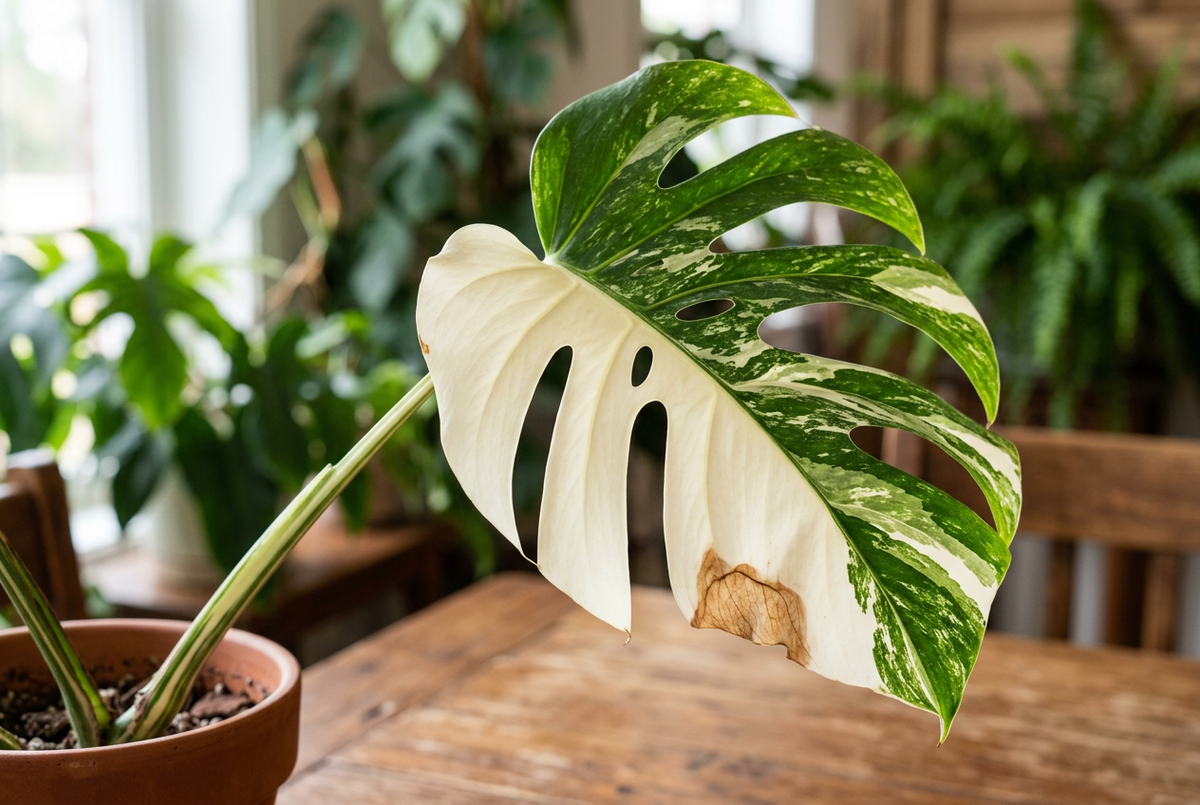
But then something unexpected happens. Those beautiful white sections start turning brown.
Maybe the edges become crispy, small brown spots appear, or an entire white section begins to dry out.
Naturally, you start wondering: "Why is my Variegated Monstera turning brown, and how can I stop it?"
The good news is that brown spots don't always mean your plant is dying. Variegated Monstera leaves are more sensitive than regular green Monstera leaves, particularly in areas with little or no chlorophyll.
However, browning can also signal watering problems, root damage, excessive sunlight, or environmental stress.
In this guide, we'll explain why Variegated Monstera leaves turn brown, how to identify the cause, and what you can do to keep your plant healthy.
Why Do the White Parts of Variegated Monstera Turn Brown?
One of the most important things to understand about Variegated Monstera is how variegation works.
The beautiful white, cream, yellow, or mint-colored patterns appear because certain areas of the leaves contain reduced amounts of chlorophyll.
Chlorophyll is the green pigment plants use to capture light energy for photosynthesis.
In highly variegated leaves, white sections may contain little or no chlorophyll, meaning those areas contribute less to the plant's energy production.
This makes pale sections more vulnerable to certain environmental stresses.
You may notice that the white portions turn brown while the green sections remain healthy.
However, brown spots on white foliage aren't automatically a sign of one specific problem. The cause can include sunlight exposure, moisture stress, damaged roots, physical injury, or other environmental conditions.
Understanding the symptoms is the first step toward finding the right solution.
1. Too Much Direct Sunlight
Excessive direct sunlight is one of the most common reasons Variegated Monstera develops brown patches.
Although variegated plants need sufficient light to support growth, intense sunlight can damage their delicate foliage.
White and cream sections are particularly susceptible to leaf scorch.
Signs of Sunburn
-
Brown or bleached patches on leaves
-
Crispy white sections
-
Dry, papery leaf tissue
-
Damage appearing after moving the plant closer to direct sunlight
-
Browning concentrated on the side facing the window
How to Fix It
Move your Variegated Monstera to a location with bright, indirect light.
An east-facing window can be a good starting point, while stronger afternoon sunlight may require filtering with sheer curtains.
If your plant has been growing in lower light, gradually introduce it to brighter conditions.
Avoid suddenly exposing a shade-grown Monstera to intense sunlight.
Remember: Variegated Monstera needs enough light for healthy growth, but harsh direct sunlight can damage its beautiful white foliage.
2. Low Humidity and Dry Indoor Air
Variegated Monstera is a tropical plant that generally appreciates moderate to high humidity.
Dry indoor air, particularly during winter or in heavily air-conditioned rooms, may increase moisture stress.
This can contribute to crispy leaf edges and browning.
Signs of Humidity Stress
-
Brown, crispy leaf tips
-
Dry leaf margins
-
White sections gradually developing brown edges
-
Leaves losing moisture more quickly
-
Browning becoming worse during dry indoor conditions
How to Fix It
Consider using a humidifier if your indoor air is consistently dry.
Many Variegated Monsteras grow well with moderate to high humidity, and some growers maintain approximately 60–80% relative humidity for sensitive plants.
However, this range isn't mandatory for every established Monstera.
Stable humidity is more important than repeatedly creating dramatic changes.
Maintain gentle airflow and avoid keeping leaves constantly wet.
A humidifier is generally more reliable for controlling ambient humidity than frequent misting.
3. Underwatering and Inconsistent Moisture
Underwatering can also cause Variegated Monstera leaves to develop brown edges.
When the growing medium becomes excessively dry, the roots cannot provide enough water to support the foliage.
White sections may show visible damage as the plant experiences water stress.
Signs of Underwatering
-
Very dry growing medium
-
Lightweight pot
-
Drooping foliage
-
Crispy brown edges
-
Leaves losing firmness
-
Soil pulling away from the container
How to Fix It
Check the growing medium before watering.
If the root zone is dry and the roots are healthy, water thoroughly until moisture reaches the entire root system.
Allow excess water to drain from the container.
Avoid letting your Variegated Monstera remain excessively dry for prolonged periods.
However, don't water automatically just because you notice brown leaf edges. Always check the growing medium first.
4. Overwatering and Root Rot
This is another important cause of browning that collectors sometimes overlook.
A Variegated Monstera may develop brown or yellowing leaves when its roots remain in excessively wet growing media.
Roots need oxygen as well as moisture.
When the growing medium stays waterlogged, roots may deteriorate and become unable to absorb water efficiently.
As a result, the plant can experience moisture stress even when the soil feels wet.
Signs of Overwatering
-
Growing medium staying wet for unusually long periods
-
Yellowing leaves
-
Brown patches appearing with other signs of decline
-
Drooping despite moist soil
-
Soft or mushy roots
-
Unpleasant smell from the pot
How to Fix It
Stop watering automatically and check the condition of the growing medium.
If the plant is declining and root rot is suspected, carefully inspect the roots.
Remove clearly rotten roots using clean tools and repot into a suitable growing medium when necessary.
Use a container with drainage holes and avoid oversized pots that hold excessive moisture.
A healthy root system is one of the most important factors in maintaining beautiful variegated foliage.
5. Not Enough Light
While excessive direct sunlight can burn leaves, insufficient light can also create problems.
Variegated Monstera generally grows more slowly than fully green Monstera because its leaves have less chlorophyll available for photosynthesis.
Without adequate light, the plant may struggle to support healthy growth.
Signs of Insufficient Light
-
Slow growth
-
Small new leaves
-
Long spaces between nodes
-
Weak or stretched stems
-
New leaves becoming predominantly green in some variegated forms
-
Overall decline when combined with other growing problems
How to Fix It
Provide bright, indirect light throughout the day.
If your home doesn't receive enough natural light, consider using a suitable grow light.
Remember that insufficient light isn't necessarily the direct cause of every brown patch.
However, improving inadequate lighting can support healthier future growth.
6. Too Much Fertilizer
Fertilizer provides nutrients that support root development and new foliage, but excessive fertilizer can damage roots and cause leaf problems.
When fertilizer salts accumulate in the growing medium, they may interfere with water uptake and damage sensitive roots.
Signs of Fertilizer Problems
-
Brown leaf tips
-
Crispy margins
-
White mineral deposits on the growing medium
-
Slow or unhealthy growth
-
Browning appearing after excessive feeding
How to Fix It
Use a balanced fertilizer according to the product's instructions.
Avoid applying concentrated fertilizer more frequently than recommended.
If excessive salt buildup is suspected and the roots are otherwise healthy, carefully flushing a well-draining growing medium with suitable water may help.
Do not add more fertilizer to a stressed plant in an attempt to repair brown foliage.
Healthy roots and balanced nutrition are more useful than heavy feeding.
7. Temperature Stress and Cold Drafts
Variegated Monstera prefers warm, stable growing conditions.
Sudden temperature changes, cold drafts, or excessive heat can stress the plant and contribute to leaf damage.
Common Temperature Problems
-
Cold air from windows during winter
-
Direct airflow from air conditioners
-
Heat exposure near radiators
-
Sudden movement between different environments
-
Very cold growing media
How to Fix It
Keep your Variegated Monstera in a stable indoor environment.
Many commonly cultivated Monstera deliciosa varieties grow well around 65–80°F (18–27°C), although individual growing conditions may vary.
Avoid exposing the plant to cold drafts or extreme heat.
If you move your plant into a different environment, make changes gradually whenever possible.
8. Pests or Leaf Disease
Not every brown spot comes from sunlight or watering.
Some pests and plant diseases can also damage Monstera foliage.
Common indoor pests include spider mites, thrips, mealybugs, and scale insects.
Signs to Watch For
-
Tiny moving insects
-
Fine webbing
-
Silvery feeding scars
-
Sticky residue
-
Distorted new leaves
-
Brown or dark spots that continue spreading
-
Water-soaked or unusually soft lesions
How to Fix It
Inspect the undersides of leaves, stems, and new growth carefully.
If pests are found, isolate the plant from the rest of your collection.
Identify the problem before applying an appropriate treatment according to its instructions.
If dark, wet-looking lesions continue spreading, consider a plant disease and seek an appropriate diagnosis.
Avoid assuming that every brown area on a Variegated Monstera is harmless or caused by low humidity.
9. Natural Aging, Physical Damage, and Shipping Stress
Sometimes, browning occurs because a leaf has experienced physical damage or is naturally aging.
Older leaves may eventually decline as a plant continues growing.
Variegated leaves can also become damaged through handling, transport, or contact with surrounding objects.
Newly imported plants may show cosmetic stress after shipping because of changes in temperature, humidity, light, and root condition.
How to Fix It
Inspect the overall plant before making major changes.
If the roots, stems, and new growth remain healthy, minor cosmetic browning may not indicate a serious problem.
For recently shipped plants, maintain stable conditions and avoid unnecessary repotting or fertilization.
Focus on healthy new growth rather than expecting every existing leaf to remain perfect forever.
Why Is Only the White Part of My Monstera Turning Brown?
This is one of the most common questions among Variegated Monstera collectors.
White leaf sections contain little or no chlorophyll and are generally more vulnerable to certain stresses than green tissue.
Because of this, browning may appear in the pale sections first.
However, the appearance alone cannot determine the exact cause.
If only the white areas are turning crispy, check sunlight exposure, humidity, and moisture conditions.
If the plant is also developing yellow leaves, soft stems, or unhealthy roots, investigate watering and root health.
The goal is to identify what is causing the damage rather than treating all white-section browning as the same problem.
Will Brown Monstera Leaves Turn White Again?
Unfortunately, no.
Once leaf tissue has become brown and necrotic, it will not return to its original green or white color.
However, this doesn't mean the whole leaf is useless.
If significant healthy green tissue remains, the leaf can continue contributing to photosynthesis.
Should You Cut Off the Brown Parts?
You can trim fully dead, crispy areas for appearance if you wish, using clean scissors.
However, trimming is optional and doesn't cure the underlying problem.
Avoid cutting deeply into healthy green or white tissue.
If only a small part of the leaf has browned, keeping the leaf is often better than removing it entirely.
Focus on protecting future leaves rather than trying to restore damaged tissue.
How to Stop Variegated Monstera Leaves From Turning Brown
The best prevention strategy is to maintain stable growing conditions.
Provide Appropriate Light
Use bright, indirect light and avoid sudden exposure to intense direct sunlight.
Maintain Healthy Roots
Choose a well-draining growing medium and a container with drainage holes.
Water Based on Plant Needs
Check the growing medium before watering rather than relying on a fixed schedule.
Maintain Suitable Humidity
Avoid extremely dry air and provide gentle circulation.
Fertilize Carefully
Use an appropriate fertilizer during active growth without excessive feeding.
Avoid Temperature Extremes
Protect the plant from cold drafts, excessive heat, and sudden environmental changes.
Check for Pests
Inspect the foliage regularly, especially new growth.
Be Patient
Variegated Monstera often grows more slowly than fully green varieties.
Consistent care is usually more effective than frequently changing the growing environment.
Monstera Albo vs Thai Constellation: Do They Brown Differently?
Two of the most popular Variegated Monsteras are Monstera Albo and Monstera Thai Constellation.
Both are forms of Monstera deliciosa, but they often have different variegation patterns.
Monstera Albo
Monstera Albo is admired for its striking white and green variegation.
Some plants produce large white sectors, marbled patterns, or dramatic half-moon leaves.
Large white areas can be particularly vulnerable to visible browning when the plant experiences stress.
Monstera Thai Constellation
Monstera Thai Constellation is known for its cream-colored speckled or marbled foliage.
Its variegation often appears distributed across the leaves, although patterns vary between individual plants.
Thai Constellation can also develop brown patches when growing conditions are unsuitable.
Which Is Easier to Grow?
Both can be grown successfully indoors with appropriate care.
Individual plant health, root condition, light, and the amount of pale tissue can make a meaningful difference.
Neither variety is completely immune to browning.
When choosing a Variegated Monstera, prioritize a healthy rooted plant with a suitable balance of green foliage.
Can Too Much White Variegation Cause Problems?
Highly variegated plants can be incredibly beautiful, but large white sectors contain less photosynthetically active tissue.
This may limit the plant's ability to produce energy compared with a plant that has more green foliage.
A plant producing almost entirely white leaves may have difficulty supporting long-term healthy growth if it lacks sufficient green tissue elsewhere.
For beginners, plants with a balanced mix of green and variegated sections may be easier to manage.
However, the amount of variegation is only one factor. Roots, light, and overall plant health remain important.
What to Do if Your Variegated Monstera Turns Brown After Shipping
If your Variegated Monstera recently arrived from an online seller or international shipment, some browning may be associated with shipping stress.
Long-distance transport can expose plants to darkness, temperature fluctuations, dehydration, and root disturbance.
What You Should Do
-
Carefully unpack and inspect the plant.
-
Check the leaves, stem, and accessible roots.
-
Keep the plant in appropriate indirect light.
-
Avoid exposing it immediately to harsh sunlight.
-
Water according to root and growing-medium conditions.
-
Maintain suitable humidity and airflow.
-
Avoid excessive fertilizer immediately after shipping.
-
Monitor the plant for healthy new growth.
Do not assume that every brown leaf requires immediate removal.
An otherwise healthy imported plant may need time to acclimate to its new environment.
How to Choose a Healthy Variegated Monstera Before Buying
Choosing a healthy plant can help reduce problems after arrival.
Before buying, consider:
-
Root condition
-
Stem firmness
-
Healthy growth points
-
Balanced variegation
-
Leaf condition
-
Plant size and maturity
-
Shipping method
-
Seller experience
-
Acclimation requirements
Actual plant photos are particularly valuable for Variegated Monstera because individual plants can develop very different patterns.
A beautiful leaf is exciting, but healthy roots and established growth are equally important.
Discover Beautiful Variegated Monstera at Aroid Market
Variegated Monstera plants are among the most fascinating tropical houseplants to collect.
From dramatic Monstera Albo to the distinctive patterns of Thai Constellation, every plant offers something unique.
At Aroid Market, we share a passion for rare and collectible tropical plants sourced and cultivated in Indonesia.
Our Monstera selection includes variegated collector plants such as Monstera Albo, Thai Constellation, and other distinctive forms, subject to availability.
For customers in the United States, Aroid Market also helps simplify international purchasing through our USA forwarding system.
For eligible orders, our team coordinates the import arrangements, so buyers don't need to personally arrange import permits or customs brokerage.
Whether you're choosing your first Variegated Monstera or expanding an established collection, understanding plant health and proper care can make the experience more rewarding.
Explore the Monstera Collection at Aroid Market and discover rare tropical foliage for your collection.
Frequently Asked Questions About Variegated Monstera Browning
Why are the white parts of my Monstera turning brown?
White variegated tissue is more vulnerable to some environmental stresses. Strong sunlight, moisture problems, low humidity, root damage, or physical injury may contribute to browning.
Is it normal for Monstera Albo to have brown spots?
Small areas of browning can occur, especially on delicate pale foliage, but they should not automatically be dismissed as normal. Check the plant's growing conditions and monitor whether the damage spreads.
Can brown variegated leaves recover?
Brown, dead leaf tissue cannot return to its original color. However, healthy parts of the leaf can continue functioning, and future leaves may grow normally if the underlying issue is corrected.
Should I cut off brown white sections?
Trimming dead tissue is optional. Avoid removing healthy foliage unnecessarily and focus on correcting the cause.
Does Variegated Monstera need high humidity?
Many Variegated Monsteras appreciate moderate to high humidity, but requirements vary with the environment and plant condition. Stable humidity and good airflow are beneficial.
Can too much sunlight cause Monstera Albo to turn brown?
Yes. Strong direct sunlight may scorch the pale sections of the leaves, causing dry, brown patches.
Why is my Thai Constellation developing brown leaf edges?
Possible causes include low humidity, inconsistent watering, root problems, excessive sunlight, or temperature stress. Check the growing medium and surrounding conditions.
Should I water my Monstera more when the leaves turn brown?
Not automatically. Browning can result from both excessive dryness and root damage caused by overwatering. Check the growing medium and root condition first.
Why is my Variegated Monstera turning brown after shipping?
Shipping stress, dehydration, temperature changes, or root disturbance may contribute. Provide stable care and inspect the roots if the plant continues declining.
How can I prevent brown spots on new Variegated Monstera leaves?
Maintain bright indirect light, healthy roots, appropriate watering, stable humidity, balanced nutrition, and suitable temperatures. Inspect regularly for pests.
Final Thoughts: Beautiful Variegation Starts With Healthy Growing Conditions
Seeing your Variegated Monstera turn brown can be disappointing, especially when you've spent time caring for its beautiful white and green foliage.
But remember: browning isn't always a sign that your plant is dying.
Sometimes, a small adjustment to lighting, watering, or humidity can help prevent further damage.
Other times, the real problem may be hidden in the roots.
The most important thing is to understand what your plant needs before making major changes.
Brown areas won't become white again, but healthy new leaves can continue to develop when your Monstera receives appropriate care.
With patience, stable conditions, and healthy roots, your Variegated Monstera can remain a stunning part of your indoor collection.
And when you're ready to explore more rare tropical foliage, discover the Variegated Monstera Collection at AroidMarket.com.

Written by Aroid Market


Leave a comment
This site is protected by hCaptcha and the hCaptcha Privacy Policy and Terms of Service apply.