
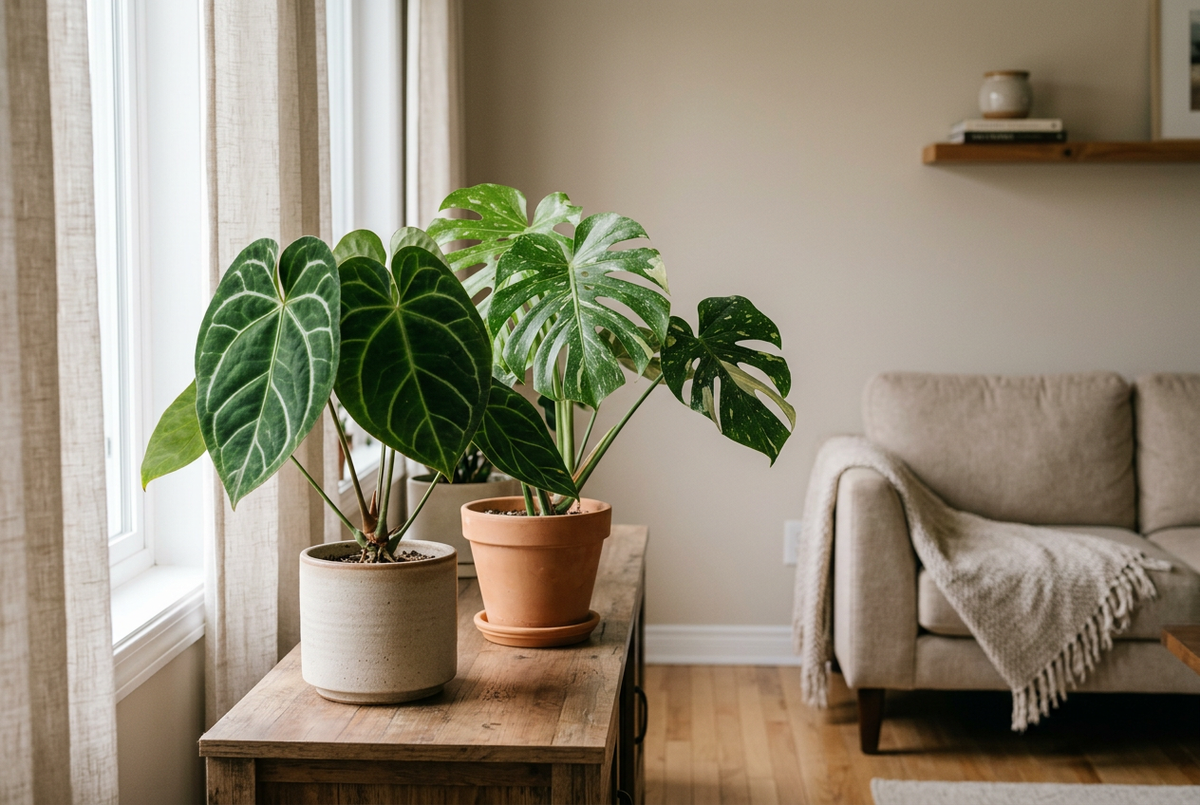
Can Rare Tropical Plants Grow in Normal Home Humidity?
You've fallen in love with a beautiful rare Anthurium, a stunning Philodendron, or a unique Hoya. But before adding it to your collection, you have one question: "Can this plant actually survive in my home without a greenhouse or humidifier?"
If you've spent time in the rare plant community, you've probably seen collectors growing plants inside humidity cabinets, greenhouses, and specialized plant rooms.
It can make rare tropical plants seem difficult or expensive to maintain.
But here's the good news: not every rare tropical plant needs extremely high humidity to grow indoors.
Many tropical houseplants can adapt to ordinary household conditions when provided with appropriate light, healthy roots, careful watering, and stable temperatures.
However, some sensitive species may struggle in dry environments and benefit from additional humidity.
In this guide, we'll explore whether rare tropical plants can grow in normal home humidity, which plants are more adaptable, which may need extra care, and how to create a healthy indoor growing environment without turning your entire home into a greenhouse.
What Is Normal Home Humidity?
Humidity describes the amount of water vapor in the air. For indoor plants, it's usually measured as relative humidity (RH), expressed as a percentage.
Household humidity varies depending on climate, season, heating, air conditioning, and ventilation.
In many homes, relative humidity may fall around 30–60%, although heated homes during winter can become considerably drier.
For many common tropical houseplants, approximately 40–60% relative humidity can provide a reasonable growing environment.
However, some moisture-loving tropical species perform better at higher humidity levels.
The important thing to understand is that no single humidity percentage is ideal for every rare plant.
A mature Hoya carnosa may tolerate conditions that would be challenging for a delicate juvenile velvet Anthurium.
Before investing in specialized equipment, find out what your particular species needs.
Can Rare Tropical Plants Really Grow at 40–60% Humidity?
Yes. Many established tropical houseplants can grow successfully at approximately 40–60% relative humidity.
Plants that are already acclimated to household conditions often tolerate moderate humidity better than recently imported, juvenile, or particularly sensitive specimens.
However, being able to survive and growing at maximum potential are not always the same thing.
A plant may remain healthy at 45% humidity but produce larger or less damaged new leaves in a more humid environment.
Other plants may show little noticeable difference.
What Matters Besides Humidity?
Successful tropical plant care also depends on:
-
Appropriate light
-
Healthy roots
-
Suitable growing medium
-
Proper watering
-
Stable temperatures
-
Air circulation
-
Plant maturity
-
Species-specific requirements
Humidity is important, but it is only one part of the growing environment.
Why Do Tropical Plants Like Humidity?
Many tropical plants originate from environments where atmospheric moisture is relatively high.
Humidity influences transpiration, the process through which plants lose water from their leaves.
When the surrounding air is very dry, plants may lose water more rapidly.
If the roots cannot replace that moisture quickly enough, the plant may experience water stress.
Higher humidity generally reduces the rate of water loss from leaves, although temperature and other environmental factors also matter.
For sensitive plants, maintaining appropriate humidity can help support healthy foliage development.
However, excessive humidity combined with poor ventilation can create its own problems.
The goal is balance, not simply achieving the highest humidity possible.
1. Hoya: A Collectible Plant That Can Adapt to Home Humidity
Hoya is one of the most fascinating tropical plant groups for collectors.
With its distinctive foliage, unusual leaf shapes, silver markings, and beautiful flowers, Hoya offers incredible variety.
And here's something encouraging: many commonly cultivated Hoyas can adapt well to average indoor humidity.
For example, established Hoya carnosa plants often grow successfully at approximately 40–60% relative humidity.
Other relatively adaptable Hoyas may include Hoya pubicalyx and Hoya australis, depending on their growing conditions.
Does Hoya Need High Humidity?
Not every Hoya does.
Some species appreciate moderately humid conditions, while others may perform better in specialized environments.
Thin-leaved species and certain young plants may be less tolerant of prolonged dryness.
Tips for Growing Hoya in Normal Home Humidity
-
Provide sufficient bright, indirect light.
-
Use an airy, well-draining growing medium.
-
Water according to the species and root conditions.
-
Protect plants from extreme temperature changes.
-
Avoid placing them directly beside heaters or air-conditioning vents.
-
Monitor developing leaves and new growth.
If you're beginning a rare plant collection, established Hoya plants can be an excellent group to explore.
2. Philodendron: Many Types Are Surprisingly Adaptable
Philodendron is one of the most popular aroid genera among houseplant collectors.
Some Philodendrons have beautiful heart-shaped leaves, while others produce elongated, velvety, or deeply lobed foliage.
Many commonly cultivated Philodendrons are adaptable to indoor growing conditions.
For example, Philodendron hederaceum and certain established climbing Philodendrons can grow well in ordinary household humidity.
However, more demanding species, such as Philodendron melanochrysum, may benefit from higher humidity, especially while developing delicate new leaves.
Signs Your Philodendron May Be Struggling
-
New leaves have crispy edges.
-
Leaves become damaged while unfurling.
-
New growth appears unusually weak.
-
Foliage dries rapidly despite appropriate watering.
These symptoms can have multiple causes, so investigate lighting, watering, pests, and root health before assuming humidity is responsible.
How to Help Philodendron Adapt Indoors
Maintain bright indirect light, appropriate moisture, and stable temperatures.
If your Philodendron has been growing inside a highly humid greenhouse, gradually acclimate it to a less humid environment rather than immediately placing it in very dry air.
For climbing varieties, an appropriate moss pole or support may also encourage healthier, more mature growth.
3. Monstera: Tropical Beauty Without a Greenhouse
Monstera is famous for its dramatic foliage and natural leaf fenestrations.
Fortunately, established Monstera deliciosa plants are often adaptable to ordinary indoor conditions.
Many can grow successfully at moderate household humidity when provided with sufficient light and proper watering.
Does Monstera Need 80% Humidity?
Generally, no.
While Monstera may appreciate humid conditions, a mature Monstera deliciosa does not automatically require 80% humidity to survive or produce healthy foliage.
However, very dry indoor air may contribute to moisture stress, particularly when combined with inconsistent watering.
What About Variegated Monstera?
Variegated Monstera can also grow indoors, but its pale leaf sections may be more vulnerable to certain stresses.
Appropriate light, healthy roots, and stable moisture are essential.
Humidity can be helpful, but increasing humidity alone won't fix every brown spot on a variegated leaf.
4. Anthurium: Some Adapt Well, Others Need More Humidity
Anthurium is one of the most desirable plant groups among rare tropical plant collectors.
Species such as Anthurium crystallinum, Anthurium clarinervium, Anthurium magnificum, and Anthurium warocqueanum are admired for their dramatic foliage.
However, Anthuriums vary significantly in their environmental preferences.
Can Velvet Anthuriums Grow at 50% Humidity?
Some established velvet Anthuriums can adapt to moderate household humidity, including conditions around 50%.
However, success depends on the species, plant maturity, root health, and growing environment.
More sensitive species may develop better foliage in a more humid setting.
Which Anthuriums May Need Extra Attention?
Anthurium warocqueanum and certain delicate Anthurium hybrids may benefit from carefully maintained humidity.
Young plants or specimens recently moved from very humid growing environments can also be more sensitive.
Tips for Growing Anthuriums Indoors
-
Choose species suited to your home environment.
-
Maintain appropriate bright, indirect light.
-
Use an airy but moisture-retentive growing mix.
-
Avoid repeated severe drying or waterlogging.
-
Provide suitable humidity and gentle airflow.
-
Protect emerging leaves from physical damage.
You don't necessarily need a professional greenhouse, but understanding the requirements of your specific Anthurium is essential.
5. Scindapsus: A Good Choice for Indoor Collectors
Scindapsus is loved for its silver-patterned foliage, satin-like textures, and climbing or trailing growth.
Many commonly grown Scindapsus, including established forms of Scindapsus pictus, can adapt to moderate indoor humidity.
Does Scindapsus Require a Humidity Cabinet?
Usually not for commonly cultivated, established varieties.
However, unusual collector forms and sensitive young plants may benefit from more controlled conditions.
How to Grow Scindapsus Indoors
Provide bright indirect light, appropriate watering, and a well-draining growing medium.
Avoid prolonged dryness that causes significant leaf curling, but don't keep the roots constantly waterlogged.
A suitable climbing support may encourage larger foliage in species that naturally climb.
For collectors who love attractive leaves without specialized equipment, Scindapsus can be worth exploring.
6. What About Rare Alocasia and Other Sensitive Tropical Plants?
Some tropical plants are less forgiving of dry indoor air.
Certain Alocasia species, delicate tropical seedlings, and recently propagated collector plants may benefit from more stable humidity.
However, even within the same genus, environmental preferences vary.
A plant's size, maturity, and previous growing conditions can make a significant difference.
When Is Extra Humidity Worth Considering?
Additional humidity may be helpful when:
-
New leaves repeatedly dry or become damaged.
-
Sensitive foliage struggles despite healthy roots.
-
Your home regularly drops below approximately 35–40% humidity.
-
A plant has recently arrived from a significantly more humid environment.
-
The particular species is known to require very humid conditions.
Before increasing humidity, check that lighting, watering, and root health are appropriate.
How to Tell if Your Rare Plant Needs More Humidity
Plants cannot tell you their preferred humidity level directly, but their growth can provide clues.
Possible signs of dry-air stress include:
-
Crispy leaf margins
-
Brown leaf tips
-
Delicate new leaves drying prematurely
-
Problems with leaf expansion
-
Increased moisture loss during hot, dry conditions
However, these symptoms are not specific to low humidity.
Brown edges can also result from underwatering, root damage, excessive fertilizer, sunlight exposure, or other environmental stress.
The best approach is to measure humidity and examine the plant's entire growing environment before making changes.
How to Measure Humidity at Home
One of the easiest ways to understand your indoor growing conditions is to use a hygrometer.
A hygrometer measures relative humidity and can help you see how conditions change throughout the day.
Where Should You Place a Hygrometer?
Place it near your plant collection, ideally around foliage height.
Avoid placing it directly in a humidifier's mist or against a wet surface.
For more useful readings, check humidity at different times, including during periods when heating or air conditioning is operating.
Why Measuring Matters
You may discover that your home already has suitable humidity for many tropical plants.
Or you may find that the room becomes extremely dry during winter.
Instead of guessing, a hygrometer allows you to make decisions based on actual conditions.
7 Easy Ways to Improve Humidity for Tropical Plants
If your home is too dry for a particular plant, there are several ways to improve its growing environment.
1. Use a Humidifier
A humidifier is one of the most practical ways to increase ambient humidity in a plant-growing area.
Choose a device appropriate for the room size and monitor humidity using a hygrometer.
Keep the humidifier clean according to its instructions to avoid dispersing contaminants.
2. Group Compatible Plants Together
Grouping plants can create a slightly more humid local environment because plants release water vapor through transpiration.
However, don't crowd plants so tightly that airflow becomes restricted.
3. Use a Plant Cabinet
A greenhouse cabinet can provide more stable humidity for sensitive tropical plants.
This is especially useful for smaller plants, delicate Anthuriums, or certain collector species.
However, higher humidity must be balanced with airflow, suitable lighting, and regular monitoring.
4. Choose a Suitable Room
Some naturally humid rooms, such as bathrooms, may provide favorable conditions for tropical plants.
However, sufficient light is still necessary.
A dark bathroom without an appropriate grow light isn't automatically a good growing environment.
5. Keep Plants Away From Dry Air Sources
Avoid placing humidity-sensitive plants directly beside heaters, radiators, or air-conditioning outlets.
These locations can expose foliage to unfavorable airflow and temperature changes.
6. Maintain Appropriate Root Moisture
Healthy roots help plants replace water lost through their leaves.
Use suitable growing media and water according to the plant's needs.
Increasing humidity won't compensate for unhealthy roots or consistently incorrect watering.
7. Acclimate Plants Gradually
If a plant has been growing at very high humidity, moving it suddenly into dry household air may cause stress.
Where possible, gradually adjust its environment while monitoring foliage and root health.
This is particularly helpful for sensitive collector plants.
Does Misting Really Increase Humidity?
Misting is a popular houseplant care practice, but its effects are often misunderstood.
Spraying water onto leaves may temporarily wet the foliage or increase humidity very briefly.
However, misting is not a reliable way to maintain stable room humidity throughout the day.
For plants that genuinely need higher atmospheric humidity, a properly maintained humidifier or ventilated growing cabinet is generally more effective.
Frequent leaf wetness may also increase disease risk in some situations, particularly when airflow is poor.
For velvet-leaf Anthuriums, avoid repeatedly soaking delicate foliage in stagnant conditions.
Focus on controlling the surrounding environment rather than constantly spraying the leaves.
Can Too Much Humidity Harm Indoor Plants?
Yes. More humidity isn't always better.
When humidity remains very high, especially in poorly ventilated spaces, moisture can collect on leaves, windows, walls, and other surfaces.
This can encourage mold growth and certain plant diseases.
High humidity may also slow evaporation from growing media, affecting watering requirements.
For ordinary living spaces, maintaining extremely high humidity can create problems for the building and its occupants.
The U.S. Environmental Protection Agency recommends keeping indoor relative humidity below 60%, ideally around 30–50%, to help control indoor mold.
If a sensitive plant needs significantly higher humidity, a well-managed plant cabinet may be more practical than increasing humidity throughout your home.
Always monitor condensation and provide appropriate ventilation.
Can Rare Plants Survive Winter Heating and Air Conditioning?
Yes, many can, but seasonal environmental changes deserve attention.
During winter, indoor heating may significantly reduce relative humidity.
Air conditioning can also create dry or rapidly changing conditions near vents.
Winter Plant Care Tips
-
Measure humidity instead of guessing.
-
Keep plants away from heating vents.
-
Avoid cold drafts from windows and doors.
-
Adjust watering based on light and temperature.
-
Use a humidifier if necessary.
-
Provide suitable grow lighting when daylight is limited.
-
Monitor sensitive new foliage.
Plants may grow more slowly in winter because of reduced light and temperature, even when humidity is adequate.
Can Imported Rare Plants Adapt to Normal Home Humidity?
Many imported tropical plants can adapt successfully, but acclimation depends on the species and plant condition.
Plants grown in humid greenhouses may experience stress when moved into significantly drier indoor environments.
Shipping may also affect roots, foliage, and water balance.
What to Do After an Imported Plant Arrives
-
Carefully inspect the plant's condition.
-
Check the roots and growing medium.
-
Place it in appropriate indirect light.
-
Avoid extreme temperatures and direct airflow.
-
Maintain suitable humidity for the species.
-
Water according to root condition rather than automatically.
-
Avoid unnecessary heavy fertilization during recovery.
-
Monitor new growth and gradual acclimation.
Don't assume every imported plant requires 80% humidity.
Some established plants adapt well to moderate household conditions, while more sensitive species may need a temporary or long-term controlled environment.
Which Rare Plants Should Beginners Choose for Normal Home Humidity?
If you're just beginning your rare plant journey, consider starting with established, adaptable plants.
Some options worth exploring include:
-
Hoya carnosa
-
Hoya pubicalyx
-
Philodendron hederaceum
-
Monstera deliciosa
-
Scindapsus pictus
-
Other appropriately acclimated tropical collector plants
For more advanced growers, velvet Anthuriums, sensitive Philodendrons, and other demanding tropical species can offer rewarding challenges.
However, choose plants based on their actual growing requirements rather than assuming all rare plants need the same environment.
Discover Rare Tropical Plants at Aroid Market
At Aroid Market, we believe that collecting rare tropical plants should be exciting, rewarding, and accessible to plant lovers with different levels of experience.
From collectible Hoyas and silver-patterned Scindapsus to beautiful Philodendrons, Anthuriums, and variegated tropical plants, our selection offers many ways to build a unique indoor collection.
Not every rare plant requires an expensive greenhouse setup. The key is understanding which species match your home environment and choosing healthy plants that suit your growing conditions.
Based in Indonesia, Aroid Market offers rare and collectible tropical plants for international collectors, enthusiasts, and resellers.
For customers in the United States, our USA forwarding system also helps simplify international purchasing. For eligible orders, our team coordinates import arrangements, so customers don't need to organize their own import permits or customs brokerage.
Whether you're starting your collection or searching for your next special plant, explore the diversity of tropical foliage and discover what suits your growing space.
Explore Hoya, Philodendron, Anthurium, and Scindapsus at Aroid Market.
Frequently Asked Questions About Rare Plant Humidity
Can rare tropical plants grow at 40% humidity?
Some established tropical plants can grow successfully at approximately 40% relative humidity, particularly adaptable species. More sensitive plants may benefit from additional humidity.
Is 50% humidity enough for Anthurium?
Some acclimated Anthuriums can grow at 50% humidity, but sensitive velvet-leaf species may prefer more humid conditions. Root health, light, and watering also matter.
Do Hoyas need high humidity?
Not all Hoyas do. Many commonly cultivated Hoyas adapt well to average indoor humidity, although preferences vary by species.
Can Philodendron grow without a humidifier?
Yes. Many established Philodendrons can grow successfully in ordinary household conditions, provided their other care requirements are met.
Do rare plants need a greenhouse cabinet?
No. A greenhouse cabinet can benefit sensitive species, but many tropical houseplants can grow without one.
Is 60% humidity good for tropical plants?
Many tropical plants appreciate humidity around 60%. However, whole-home humidity should also consider mold prevention and building conditions. Enclosed growing cabinets may be more appropriate for humidity-sensitive species.
Why do my Anthurium leaves have brown edges?
Brown edges may result from low humidity, watering problems, damaged roots, excessive fertilizer, or sunlight stress. Check the entire growing environment before diagnosing the cause.
Should I mist rare tropical plants every day?
Daily misting usually doesn't maintain stable room humidity. A humidifier or appropriately ventilated plant cabinet is more reliable when additional humidity is necessary.
Can imported plants adjust to low humidity?
Some can, especially established, adaptable species. Sensitive plants may need gradual acclimation or a more controlled environment.
What is the best humidity for rare tropical plants?
There is no universal ideal. Many houseplants do well around 40–60% humidity, while certain tropical species prefer higher levels. Always research the specific species.
Final Thoughts: You Don't Need a Greenhouse to Love Rare Plants
So, can rare tropical plants grow in normal home humidity?
Absolutely—many can.
The key is choosing plants that suit your environment and understanding their individual requirements.
Some Hoyas, Philodendrons, Monsteras, and Scindapsus can adapt beautifully to normal household conditions.
More delicate Anthuriums and other sensitive tropical plants may appreciate additional humidity, especially during new leaf development or acclimation.
But humidity isn't everything.
Healthy roots, appropriate light, careful watering, stable temperatures, and consistent care are equally important.
You don't need to turn your home into a tropical rainforest to enjoy beautiful houseplants.
Sometimes, the best rare plant collection starts with choosing the right plants for the home you already have.
Discover rare tropical plants from Indonesia at AroidMarket.com and find something special for your indoor collection.

Written by Aroid Market


Leave a comment
This site is protected by hCaptcha and the hCaptcha Privacy Policy and Terms of Service apply.