
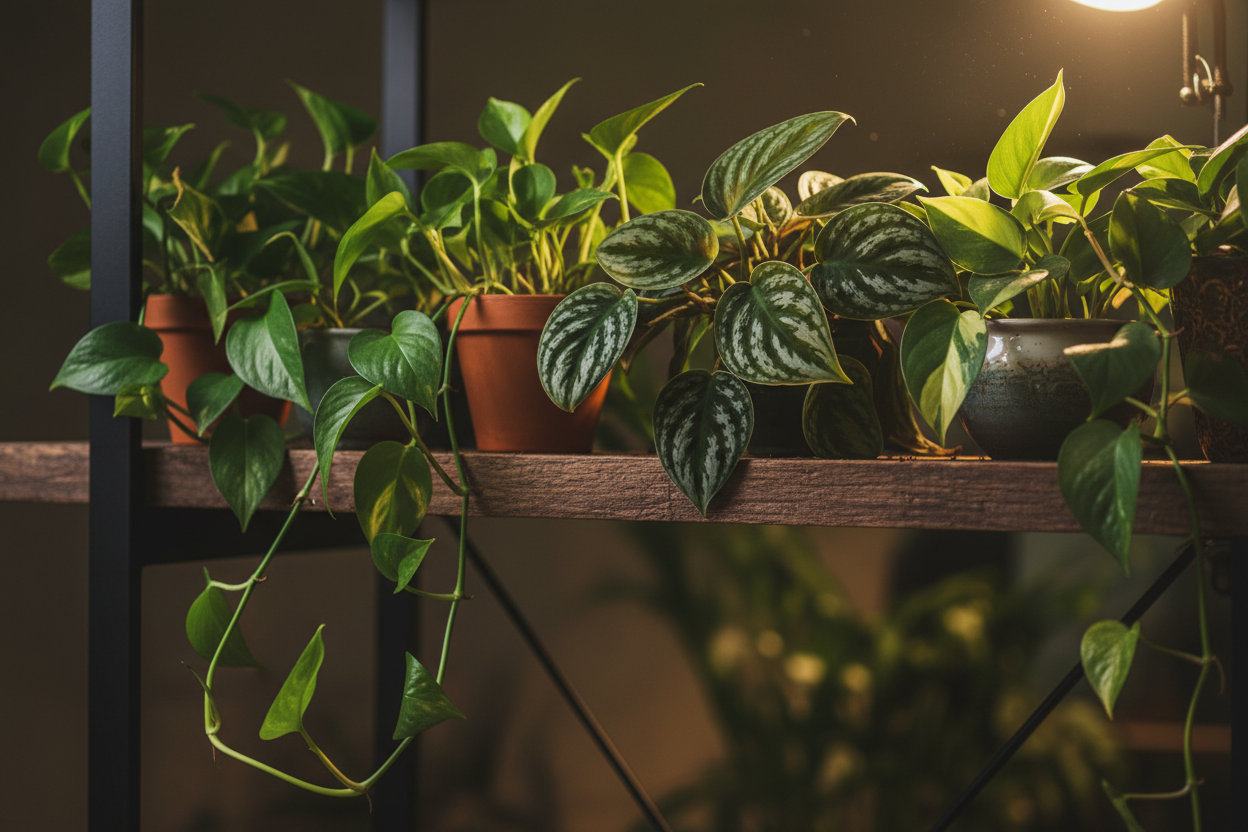
Low Light Indoor Plants for Beginners
Not every home has large sunny windows, and not every room gets bright natural light all day. Many beginners want indoor plants but worry that their home is too dark for plants to survive.
The good news is that some indoor plants can tolerate lower light better than others. These plants are often more forgiving, slower-growing, and easier for beginners to manage.
However, it is important to understand one thing first: low light does not mean no light. All plants need some light to survive. A plant placed in a completely dark room will not grow well long-term.
This guide will help you understand what low light really means, which indoor plants are best for beginners, and how to care for low light houseplants with confidence.
What Does Low Light Mean for Indoor Plants?
Low light usually means a room that does not receive strong direct sunlight. It may be a room with a small window, a north-facing window, filtered light, or a spot several feet away from a bright window.
Low light does not mean a windowless room. Plants still need natural light or artificial grow lights to stay healthy.
In low light conditions, plants usually grow more slowly. They may produce smaller leaves, need less water, and may not show their best color, variegation, or growth speed.
For beginners, choosing plants that tolerate lower light can make indoor plant care much easier.
Can Indoor Plants Really Grow in Low Light?
Yes, some indoor plants can grow or survive in lower light conditions, but they will usually grow slower than they would in bright indirect light.
Low light plants are usually plants that can adapt to shaded forest floors or indoor environments with less light. They are not always fast growers, but they are more forgiving for beginners.
If you want stronger growth, larger leaves, better variegation, or healthier tropical plants, bright indirect light is still better.
Best Low Light Indoor Plants for Beginners
Here are some of the best indoor plants for beginners who have lower light conditions at home.
1. Snake Plant
Snake Plant is one of the best low light indoor plants for beginners. It has upright, sword-like leaves and a clean architectural look.
This plant is popular because it is very forgiving and does not need frequent watering. It can tolerate lower light, although it will grow better with brighter indirect light.
Why beginners love Snake Plant:
-
Very low maintenance
-
Tolerates lower light
-
Does not need frequent watering
-
Great for bedrooms, offices, and corners
-
Strong and long-lasting
Snake Plant is a good choice for people who travel often, forget to water, or want a simple indoor plant.
2. ZZ Plant
ZZ Plant is another excellent option for low light homes. It has glossy green leaves and thick stems that store water.
ZZ Plant can tolerate lower light better than many tropical plants, making it a great choice for offices, apartments, and beginner plant owners.
Why beginners love ZZ Plant:
-
Tolerates low to medium light
-
Needs little watering
-
Glossy, attractive foliage
-
Good for offices and homes
-
Very beginner-friendly
ZZ Plant is perfect if you want a plant that looks elegant but does not need constant attention.
3. Pothos
Pothos is one of the easiest indoor plants to grow. It can tolerate a wide range of light conditions, including lower light.
In low light, Pothos may grow more slowly and variegated forms may become greener over time. But it is still one of the best beginner plants for shelves, hanging baskets, and trailing displays.
Why beginners love Pothos:
-
Easy to grow
-
Tolerates lower light
-
Can trail or climb
-
Easy to propagate
-
Great for shelves and hanging pots
Pothos is a great first plant because it helps beginners learn watering, growth habits, and propagation.
4. Philodendron
Some Philodendrons can adapt well to lower indoor light, especially heartleaf-type Philodendrons. They are beautiful, easy to display, and beginner-friendly.
Philodendrons can trail, climb, or grow upright depending on the type. Many beginner-friendly Philodendrons are forgiving and suitable for indoor spaces.
Why beginners love Philodendron:
-
Beautiful tropical foliage
-
Some types tolerate lower light
-
Can trail or climb
-
Great for beginners
-
Good introduction to aroids
Philodendron is a good choice if you want a tropical look without choosing a plant that is too difficult.
5. Scindapsus
Scindapsus is loved for its elegant silver-patterned leaves. It can tolerate medium to lower light, although it will usually grow better and show stronger patterns in bright indirect light.
For beginners, Scindapsus is a great choice because it feels more unique than common houseplants but is still manageable.
Why beginners love Scindapsus:
-
Beautiful silver foliage
-
Can trail or climb
-
Good for shelves and hanging baskets
-
More unique than basic green plants
-
Manageable for beginners
Scindapsus is perfect for plant lovers who want a stylish indoor plant that does not require intense sunlight.
6. Peace Lily
Peace Lily is a classic indoor plant that can tolerate lower light conditions. It has glossy green leaves and elegant white flowers.
In low light, Peace Lily may flower less often, but the foliage can still remain attractive.
Why beginners love Peace Lily:
-
Tolerates lower light
-
Shows clearly when it needs water
-
Attractive leaves and flowers
-
Good indoor display plant
-
Classic beginner houseplant
Peace Lily is a good choice for people who want a plant with both foliage and flowers.
7. Aglaonema
Aglaonema, also known as Chinese Evergreen, is a great low light indoor plant. It is known for its patterned leaves and ability to adapt to indoor conditions.
Some Aglaonema varieties have green, silver, red, pink, or cream markings.
Why beginners love Aglaonema:
-
Tolerates lower light
-
Attractive patterned foliage
-
Beginner-friendly
-
Good for homes and offices
-
Many color options
Aglaonema is a great plant for beginners who want colorful foliage without complicated care.
8. Syngonium
Syngonium is a beginner-friendly tropical plant with arrow-shaped leaves. It can adapt to indoor conditions and may tolerate medium to lower light.
However, variegated or colorful Syngonium types usually need brighter indirect light to maintain their best color.
Why beginners love Syngonium:
-
Easy to grow
-
Fast-growing in good conditions
-
Attractive arrow-shaped leaves
-
Good for small spaces
-
Easy to propagate
Syngonium is a good choice for beginners who want a plant that is simple but still interesting.
9. Hoya
Hoya is often loved by collectors because of its thick leaves, trailing vines, and unique flowers. Some Hoyas can tolerate medium indoor light, but most will grow and flower better in bright indirect light.
For low light spaces, choose Hoya only if the room still gets some natural brightness or if you can use a grow light.
Why beginners love Hoya:
-
Does not need frequent watering
-
Great for hanging baskets
-
Beautiful trailing growth
-
Many collectible varieties
-
Good for people who forget to water
Hoya can be a good beginner plant, but it should not be placed in a very dark room if you want strong growth.
10. Monstera
Monstera is one of the most popular tropical houseplants in the world. It can tolerate medium indoor light, but it is not truly a low light plant if you want large leaves and strong fenestration.
In lower light, Monstera may grow slowly and produce smaller leaves.
Why beginners love Monstera:
-
Iconic tropical leaves
-
Strong visual impact
-
Good statement plant
-
Easy to recognize
-
Great introduction to tropical houseplants
Monstera is best for beginners who have at least medium to bright indirect light.
Best Low Light Plants If You Forget to Water
If your room has lower light and you also forget to water often, choose plants that can handle both conditions better.
Good options include:
-
Snake Plant
-
ZZ Plant
-
Pothos
-
Some Hoya types
-
Aglaonema
These plants are generally more forgiving than moisture-loving tropical plants.
Best Low Light Plants for Offices
Offices often have limited natural light, air conditioning, and inconsistent care. Choose plants that are strong and low maintenance.
Good office plants include:
-
ZZ Plant
-
Snake Plant
-
Pothos
-
Aglaonema
-
Peace Lily
If your office has no window, use a grow light or place plants near artificial lighting designed for plant growth.
Best Low Light Plants for Bedrooms
Bedrooms often have softer light and less humidity than other rooms. Choose plants that are low maintenance and easy to manage.
Good bedroom plants include:
-
Snake Plant
-
ZZ Plant
-
Pothos
-
Scindapsus
-
Philodendron
These plants can add a calm, natural feeling to a bedroom without requiring constant care.
How to Care for Low Light Indoor Plants
Low light plants are usually easier, but they still need proper care.
Water Less Often
Plants in lower light use water more slowly. This means they usually need less frequent watering.
Always check the soil or growing mix before watering. If the mix still feels wet, wait.
Overwatering is especially common in low light because the soil dries more slowly.
Use Well-Draining Soil
Good drainage is important even for low light plants. Dense soil can stay wet too long and cause root problems.
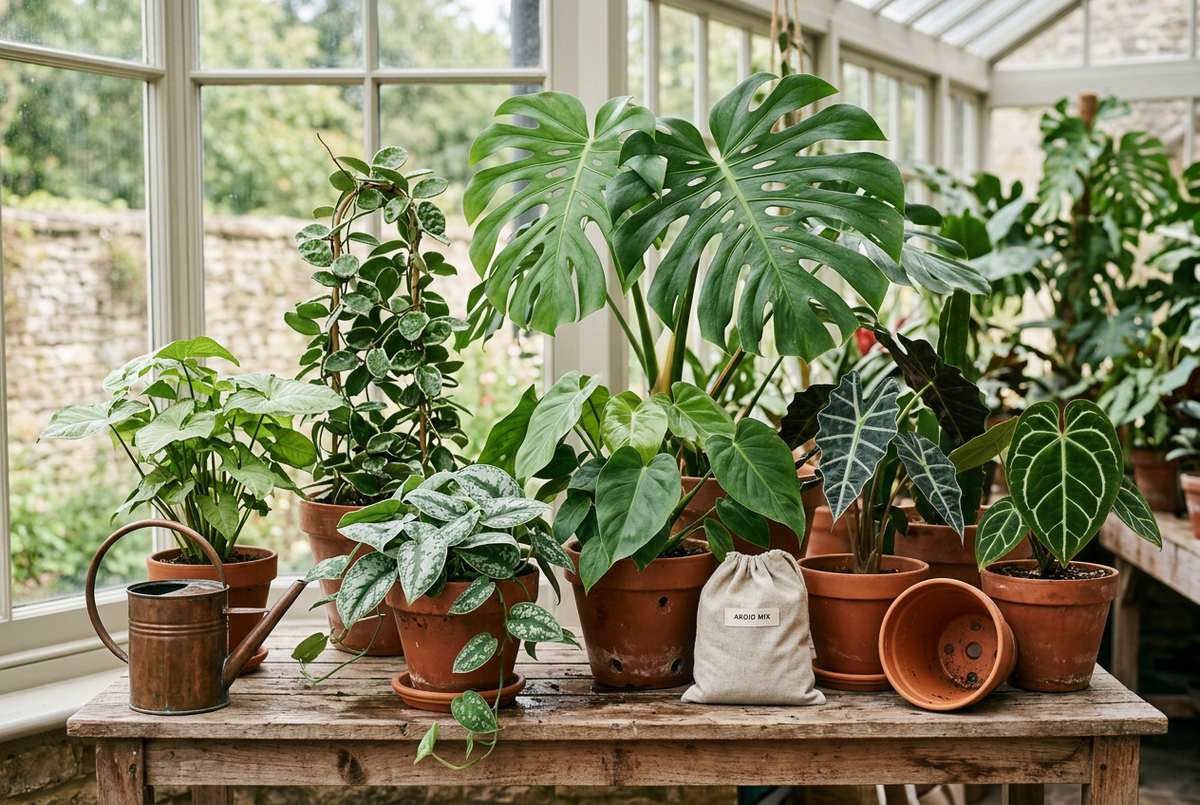
For tropical plants like Philodendron, Scindapsus, Monstera, and Syngonium, a chunky mix with bark, perlite, coco chips, pumice, or charcoal can help roots breathe.
Avoid Cold Drafts
Many indoor plants prefer stable temperatures. Avoid placing tropical plants near cold windows, air conditioning vents, or heaters.
Rotate the Plant
Plants often lean toward the light source. Rotate your plant every few weeks to encourage balanced growth.
Clean the Leaves
Dust can block light from reaching the leaves. In lower light conditions, clean leaves are especially important.
Use a soft damp cloth to gently wipe large leaves.
Do Not Fertilize Too Much
Plants in low light grow more slowly, so they do not need heavy feeding. Too much fertilizer can damage the roots.
Use fertilizer lightly during active growth and avoid fertilizing stressed plants.
Should You Use a Grow Light?
If your room is very dark, a grow light can help a lot. Grow lights are useful for plant shelves, offices, apartments, and rooms with limited windows.
A grow light can help:
-
Improve growth
-
Maintain variegation
-
Reduce stretching
-
Support rare tropical plants
-
Keep plants healthier in dark rooms
If you want to grow rare aroids, variegated plants, Anthuriums, Hoyas, or imported tropical plants in low light, a grow light is highly recommended.
Common Mistakes With Low Light Plants
Thinking Low Light Means No Light
No plant can grow well in complete darkness. If the room has no window, use a grow light.
Overwatering
Low light plants dry out slowly. Watering too often can cause yellow leaves, mushy stems, and root rot.
Choosing Variegated Plants for Dark Rooms
Variegated plants usually need brighter light to maintain their pattern. In low light, they may grow slowly or produce greener leaves.
Expecting Fast Growth
Plants grow slower in low light. This is normal. Be patient and focus on stable care.
Using Dense Soil
Dense soil holds water too long, especially in lower light. Choose a well-draining mix.
Low Light vs Bright Indirect Light
Low light plants can tolerate less light, but that does not always mean they prefer it.
Many plants will survive in low light but thrive in bright indirect light.
If you want your plants to grow faster, produce larger leaves, maintain variegation, or look their best, bright indirect light is usually better.
Can Rare Plants Grow in Low Light?
Some rare plants can tolerate medium light, but many rare tropical plants prefer bright indirect light.
Plants like rare Anthurium, Philodendron, Monstera, Hoya, Scindapsus, Alocasia, and variegated plants usually perform better with brighter filtered light.
If you want to grow rare plants in a low light space, consider using a grow light.
This is especially important for:
-
Variegated plants
-
Velvet Anthurium
-
Rare Philodendron
-
Hoya that you want to flower
-
Monstera that you want to mature
-
Imported tropical plants after acclimation
Buying Low Light and Tropical Plants From Aroid Market
Aroid Market offers rare and collectible tropical plants for international customers, especially plant lovers, collectors, resellers, and wholesale buyers in the USA.
Our selection may include rare Aroids, Hoya, Anthurium, Philodendron, Scindapsus, Syngonium, Monstera, and other tropical collector plants from Indonesia.
For beginners, easier tropical plants such as Scindapsus, Philodendron, Hoya, Syngonium, and Monstera can be a great bridge from basic houseplants to rare plant collecting.
For USA customers, Aroid Market also helps make the buying experience easier through our USA forwarding system. This allows customers to access rare tropical plants without personally handling the complicated import process.
Whether you are choosing a beginner-friendly tropical plant or building a rare plant collection, Aroid Market can help you discover unique plants for your home, collection, or plant business.
Final Thoughts
Low light indoor plants are a great choice for beginners, especially if your home does not have strong natural sunlight.
Snake Plant, ZZ Plant, Pothos, Philodendron, Scindapsus, Peace Lily, Aglaonema, Syngonium, Hoya, and Monstera can all be good options depending on your space and care routine.
Remember: low light does not mean no light. Give your plants as much gentle natural light as possible, avoid overwatering, use a well-draining mix, and be patient with slower growth.
If you are ready to explore tropical houseplants and rare collector plants from Indonesia, visit AroidMarket.com and discover our latest selection for plant lovers, collectors, resellers, and USA buyers.

Written by Aroid Market


Leave a comment
This site is protected by hCaptcha and the hCaptcha Privacy Policy and Terms of Service apply.