
Chunky Aroid Mix vs. Semi-Hydro: Which Setup Fits Your Plants?
Your Monstera is ready for a repot, and you keep seeing two recommendations. Some growers swear by a chunky mix with orchid bark. Others grow their aroids in clay pebbles with a small water reservoir. Both setups can work. The choice comes down to how quickly your pots dry, how you like to water, and how well established the plant’s roots are.
What Is a Chunky Aroid Mix?
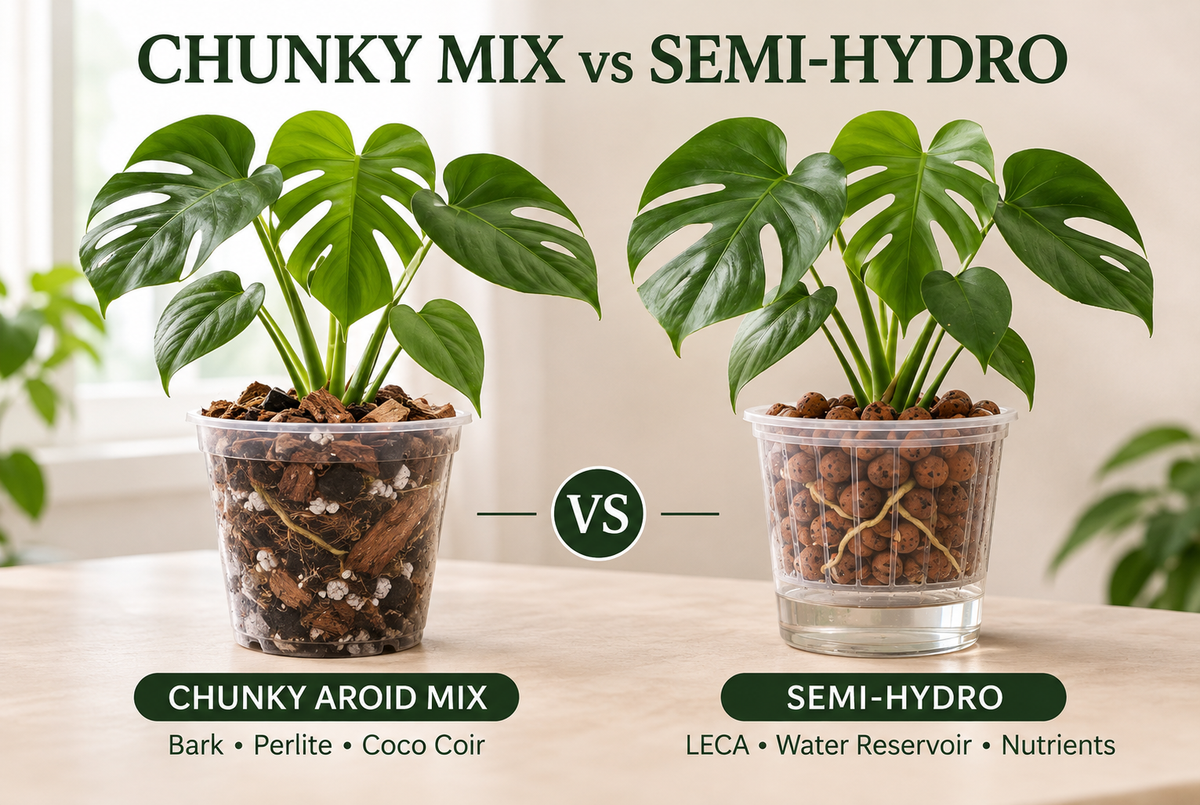
A chunky aroid mix combines a moisture-retaining base, such as coco coir or a peat-free potting mix, with larger ingredients like orchid bark and coarse perlite. The larger pieces leave spaces for air around the roots, while the finer ingredients hold some moisture between waterings.
Use a pot with drainage holes, water until the mix is evenly moistened, and let the excess drain. Before watering again, check a little below the surface or lift the pot to feel its weight. A mix that dries quickly in a small pot by a bright window can stay damp much longer in a larger pot across the room.
For a Monstera or climbing Philodendron that stays damp for days after watering, a coarser blend or a pot sized closer to the root ball may help. If your Anthurium’s mix dries faster than you can keep up with, a blend with a little more moisture-retaining material may suit your home better.
What Is Semi-Hydro?
A common semi-hydro setup uses LECA, short for lightweight expanded clay aggregate, in an inner pot above a shallow reservoir. The clay pebbles help wick moisture upward. Keep the reservoir low enough that the entire root zone stays above the waterline, with room for air around the upper roots.
LECA provides support for the roots. A nutrient solution supplies what the plant needs to grow. In practice, the routine means checking the reservoir level, replenishing the solution, and periodically flushing the medium to clear buildup.
Chunky Mix vs. Semi-Hydro at a Glance
| Chunky aroid mix | Semi-hydro with LECA | |
|---|---|---|
| Watering routine | Water from the top, let the pot drain, and check the mix before watering again. | Check the reservoir and replenish the nutrient solution as needed. |
| How you check moisture | Feel below the surface or judge by pot weight. | Check the waterline and remember that it only tells you how much solution is in the reservoir. |
| Common mistake | Watering again while the lower part of the pot is still wet. | Filling the reservoir high enough to submerge most of the root system. |
| Good fit if you prefer | A familiar pot-and-drain routine you can adjust with different ingredients. | A visible water level and a regular routine for mixing and refreshing nutrients. |
Should You Switch an Established Plant to Semi-Hydro?
If your plant is putting out healthy roots and leaves in its current mix, a routine repot is a good opportunity to stick with what’s working. If you’re curious about semi-hydro, try it with one healthy cutting or an established plant you can check regularly.
For a newly shipped aroid, check the roots and growing point before choosing a setup. If the plant is already adjusting to your home, you can give it time to settle before experimenting with a different medium. Once you make a switch, watch what happens at the roots as well as the leaves. Firm roots and fresh root tips are more informative than how the plant looks on the first day.
Which Setup Fits Your Collection?
If you already water your aroids by checking how each pot feels, start with a chunky mix and adjust how much moisture it holds. If you like seeing the water level and can keep up with refreshing a nutrient solution, try semi-hydro with one plant first.
Choosing an aroid for the setup you already enjoy? Browse the Aroidmarket collections for Monstera, Philodendron, and Anthurium, and look at each plant’s size and growth habit before picking its spot.

Written by Aroid Market



Leave a comment
This site is protected by hCaptcha and the hCaptcha Privacy Policy and Terms of Service apply.